Brief Reports
Vol. 61 No. 4 (2017)

DNA damage in acute myeloid leukemia patients of Northern Mexico

Publisher's note
All claims expressed in this article are solely those of the authors and do not necessarily represent those of their affiliated organizations, or those of the publisher, the editors and the reviewers. Any product that may be evaluated in this article or claim that may be made by its manufacturer is not guaranteed or endorsed by the publisher.
All claims expressed in this article are solely those of the authors and do not necessarily represent those of their affiliated organizations, or those of the publisher, the editors and the reviewers. Any product that may be evaluated in this article or claim that may be made by its manufacturer is not guaranteed or endorsed by the publisher.
Received: 14 September 2017
Accepted: 30 November 2017
Accepted: 30 November 2017
1896
Views
590
Downloads
142
HTML
Authors
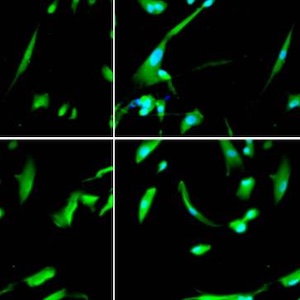
The purpose of this study was to evaluate DNA damage in the whole genome of peripheral blood leukocytes from patients with acute myeloid leukemia (AML) compared with a control group using DNA breakage detection-fluorescent in situ hybridization (DBD-FISH). Our results suggest that the DNA damage detected in patients with newly diagnosed AML was similar to that observed for the controls; this might be explained by the stimulation of a repair pathway by the pathogenesis itself. These findings indicate that inhibiting the repair pathway could be proposed to enhance the efficacy of chemotherapy.
Downloads
Download data is not yet available.
Citations




Supporting Agencies
Instituto Mexicano del Seguro Social, CONACYT.How to Cite
1.
Dávila-Rodríguez MI, Cortés-Gutiérrez EI, Hernández-Valdés R, Guzmán-Cortés K, De León-Cantú RE, Cerda-Flores RM, et al. DNA damage in acute myeloid leukemia patients of Northern Mexico. Eur J Histochem [Internet]. 2017 Dec. 11 [cited 2026 Jul. 28];61(4). Available from: https://www.ejh.it/ejh/article/view/2851