
Expression of S100β during mouse cochlear development

All claims expressed in this article are solely those of the authors and do not necessarily represent those of their affiliated organizations, or those of the publisher, the editors and the reviewers. Any product that may be evaluated in this article or claim that may be made by its manufacturer is not guaranteed or endorsed by the publisher.
Accepted: 4 March 2025
Authors
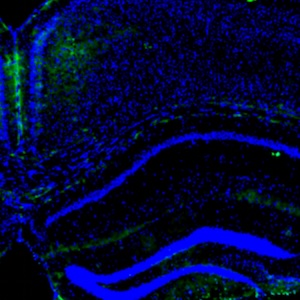
In the present study, the expression of S100β was examined in the mouse cochlea from embryonic day 17 (E17) to postnatal day 32 (P32) using immunofluorescence, aiming to explore its possible role in auditory system. At E17, S100β expression was not detected, except in the external cochlear wall. Starting at E18.5, S100β staining appeared in the organ of Corti and the stria vascularis. In the E18.5 and P1 organ of Corti, S100β was confined to the developing pillar cells. By P6, cytoplasmic staining of S100β was evident in the inner and outer pillar cells, forming the tunnel of Corti. Additionally, S100β expression extended medially into the three rows of Deiter’s cells, with labeling of their phalangeal processes. At P8, S100β continued to be expressed in the heads, bodies, and feet of the two pillar cells, as well as in the soma and phalangeal processes of the three rows of Deiter’s cells. In the lateral wall of the P8 cochlea, S100β was expressed not only in the stria vascularis but also in the spiral ligament. Between P10 and P12, S100β expression was maintained in the Deiter’s cells and pillar cells of the organ of Corti, as well as in the lateral wall, and spiral limbus. From P14 onwards, S100β expression ceased in the stria vascularis, though it persisted in the spiral ligament and spiral limbus into adulthood. Within the P14 and P21 organ of Corti, S100β remained in the Deiter’s and pillar cells. S100β immunostaining was not observed in the phalangeal processes of Deiter’s cells but was specifically present in the Deiter’s cell cups at P21. In the adult cochlea (P28 and P32), S100β expression declined in both Deiter’s and pillar cells. The dynamic spatiotemporal changes in S100β expression during cochlear ontogeny suggest its role in cochlear development and hearing function.
Downloads
Citations




Supporting Agencies
National Natural Science Foundation of China , Natural Science Foundation of Jiangsu Province, ChinaHow to Cite

This work is licensed under a Creative Commons Attribution-NonCommercial 4.0 International License.