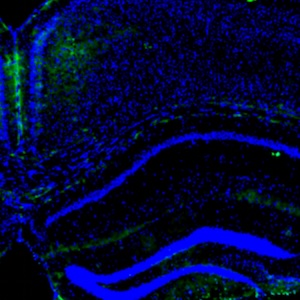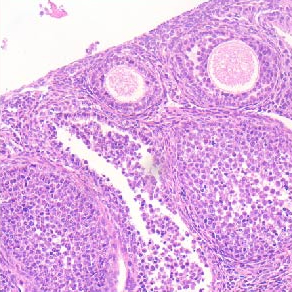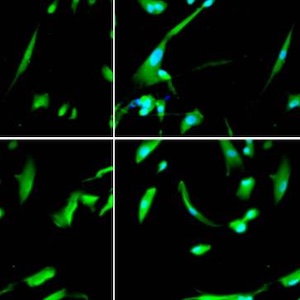

Two histological methods for recognition and study of cortical microinfarcts in thick sections

All claims expressed in this article are solely those of the authors and do not necessarily represent those of their affiliated organizations, or those of the publisher, the editors and the reviewers. Any product that may be evaluated in this article or claim that may be made by its manufacturer is not guaranteed or endorsed by the publisher.
Accepted: 13 December 2018
Authors
Cortical microinfarcts are the most widespread form of brain infarction but frequently remain undetected by standard neuroimaging protocols. Moreover, microinfarcts are only partially detectable in hematoxylin-eosin-stained (H and E) 4-10 µm paraffin sections at routine neuropathological examination. In this short report, we provide two staining protocols for visualizing cortical microinfarcts in 100-300 µm sections. For low-power microscopy, the first protocol combines aldehyde fuchsine staining for detection of lipofuscin granules and macrophages with Darrow red counterstaining for Nissl material. The second protocol combines collagen IV immunohistochemistry with aldehyde fuchsine/Darrow red or with erythrosin-phosphotungstic acid-aniline blue staining for detailed study of the capillary network. In the first protocol, microinfarcts are recognizable as radially-oriented funnel-like accumulations of aldehyde fuchsine-positive macrophages. The second protocol recognizes microinfarcts and alterations of the capillary network, at whose center accumulations of dead neurons and aldehyde fuchsine-positive macrophages cluster. In addition, the second protocol permits visualization of abnormalities within the capillary network associated with more recent microinfarcts. Both protocols can be useful for comparing MRI datasets with cortical microinfarcts in corresponding whole brain sections of 100-300 µm thickness.
Downloads
Citations