
Histopathological evaluation of RPL5 expression in triple-negative breast cancer: an integrated immunohistochemical and transcriptomic study
All claims expressed in this article are solely those of the authors and do not necessarily represent those of their affiliated organizations, or those of the publisher, the editors and the reviewers. Any product that may be evaluated in this article or claim that may be made by its manufacturer is not guaranteed or endorsed by the publisher.
Authors
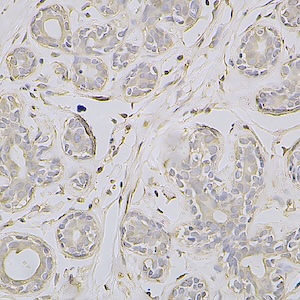
Triple-negative breast cancer (TNBC) is an aggressive subtype of breast cancer characterized by high invasiveness, limited therapeutic options, and unfavorable clinical outcomes. Ribosomal protein L5 (RPL5), a component of the large ribosomal subunit, has been implicated in ribosome biogenesis, translational regulation, and p53-associated cellular processes. This study investigated the immunohistochemical expression pattern of RPL5 in TNBC tissues and explored its potential biological significance through integrated transcriptomic analyses. Tumor tissues from 37 patients with TNBC and 7 adjacent non-tumorous breast tissues were collected from the Affiliated Tumor Hospital of Xinjiang Medical University between December 2017 and December 2023. RPL5 protein expression was evaluated by immunohistochemistry, and its association with clinicopathological characteristics was analyzed. Public transcriptomic datasets from TCGA-BRCA and GEO were further used to validate RPL5 expression patterns in TNBC. Co-expression analysis and Gene Ontology (GO)/Kyoto Encyclopedia of Genes and Genomes (KEGG) enrichment analyses were performed to investigate potential biological functions and signaling pathways associated with RPL5. Immunohistochemical analysis demonstrated significantly lower RPL5 protein expression in TNBC tissues compared with adjacent normal breast tissues (p=0.001). In contrast, transcriptomic analyses revealed significantly higher RPL5 expression in TNBC compared with non-TNBC breast cancer subtypes (p<0.001). No significant associations were observed between RPL5 expression and clinicopathological parameters, including age, tumor size, menopausal status, TNM stage, histological grade, or lymph node metastasis (all p>0.05). Survival analysis showed no significant difference in overall survival between patients with high and low RPL5 expression. Functional enrichment analyses indicated that RPL5-related genes were predominantly involved in ribosome biogenesis, translational regulation, and p53-related signaling pathways. These findings suggest that abnormal RPL5 expression may be associated with TNBC biology through ribosome-related programs, although causal roles require functional validation. RPL5 may represent a potential histopathological and molecular indicator associated with TNBC biology, although its precise functional role requires further experimental validation.
Downloads
Citations




CRediT authorship contribution
Bing Zhao, conceptualization, funding acquisition, writing original draft preparation. Peiyuan Yu, Li Li, investigation, software, statistical analysis, reviewing and editing. Zhenhui Zhao, Xiner Zhang, reviewing and editing, methodology, supervision. All authors read and approved the final manuscript.
Supporting Agencies
National Natural Science Foundation of China , Ten-zan's High-level Talent Development Programme in Medicine and HealthData Availability Statement
The data that support the findings of this study are available from the corresponding author upon reasonable request.
How to Cite

This work is licensed under a Creative Commons Attribution-NonCommercial 4.0 International License.