
Different fusion tags affect the activity of ubiquitin overexpression on spastin protein stability
All claims expressed in this article are solely those of the authors and do not necessarily represent those of their affiliated organizations, or those of the publisher, the editors and the reviewers. Any product that may be evaluated in this article or claim that may be made by its manufacturer is not guaranteed or endorsed by the publisher.
Accepted: 23 November 2021
Authors
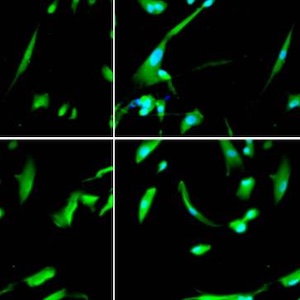
Spastin is one of the proteins which lead to hereditary spastic paraplegia (HSP), whose dysfunction towards microtubule severing and membrane transporting is critically important. The present study is to elucidate the mechanisms of the protein stability regulation of spastin. The ubiquitin encoding plasmids are transfected into COS-7 cells with different fusion tags including Green Fluorescent Protein (GFP), mCherry and Flag. The expression level of spastin was detected, microtubule severing activity and neurite outgrowth were quantified. The data showed that ubiquitin overexpression significantly induced the decreased expression of spastin, suppressed the activity of microtubule severing in COS-7 cells and inhibited the promoting effect on neurite outgrowth in cultured hippocampal neurons. Furthermore, when modulating the overexpression experiments of ubiquitin, it was found that relatively small tag like Flag, but not large tags such as GFP or mCherry fused with ubiquitin, retained the activity on spastin stability. The present study investigated the effects of small/large tags addition to ubiquitin and the novel mechanisms of post-transcriptional modifications of spastin on regulating neurite outgrowth, in the attempt to experimentally elucidate the mechanisms that control the level or stability of spastin in hereditary spastic paraplegia.
Downloads
Citations




How to Cite

This work is licensed under a Creative Commons Attribution-NonCommercial 4.0 International License.