P03 | THE ROLE OF FILAMIN A IN REGULATING BREAST CANCER CELL BEHAVIOR AND TUMOR MICROENVIRONMENT INTERACTIONS
W. Arendt1, P. Zawadka1, M. Hałas-Wiśniewska1, M. Gagat2, M. Izdebska1 | 1 Department of Histology and Embryology, Faculty of Medicine, Ludwik Rydygier Collegium Medicum in Bydgoszcz Nicolaus Copernicus University in Toruń, Poland; 2Department of Histology and Embryology, Faculty of Medicine, Ludwik Rydygier Collegium Medicum in Bydgoszcz Nicolaus Copernicus University in Toruń; Faculty of Medicine, Collegium Medicum, Mazovian Academy in Płock, Poland
All claims expressed in this article are solely those of the authors and do not necessarily represent those of their affiliated organizations, or those of the publisher, the editors and the reviewers. Any product that may be evaluated in this article or claim that may be made by its manufacturer is not guaranteed or endorsed by the publisher.
Authors
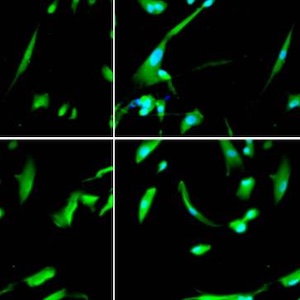
Filamin A (FLNa) is a multifunctional actin-binding protein involved in maintaining cell architecture, transducing mechanical signals, and regulating cytoskeletal dynamics. Its role in cancer is complex and context-dependent, particularly in breast cancer, where FLNa has been reported to act either as a tumor suppressor or a promoter of malignancy. In this study, we investigated the contribution of FLNa to key processes driving breast cancer progression, including proliferation, migration, invasion, and adhesion. FLNa expression was modulated in two breast cancer cell lines: the highly invasive triple-negative MDA-MB-231 and the luminal, less aggressive MCF-7. Efficient downregulation of FLNa was confirmed by Western blotting and quantitative fluorescence analysis. A series of functional assays -including wound healing, open-field migration, modified Boyden chamber, and adhesion assays- were conducted to assess the phenotypic consequences of FLNa depletion. Control groups consisted of cells with unaltered FLNa expression. Our findings show that reduced FLNa expression significantly alters the migratory, invasive, and adhesive properties of breast cancer cells. These results underscore the role of FLNa as a critical regulator of tumor cell behavior and support its relevance as a potential therapeutic target. However, due to the cell line-specific effects and conflicting reports in the literature, further research is required to clarify the context-dependent functions of FLNa within diverse tumor microenvironments.
Downloads
Citations




Supporting Agencies
-Data Availability Statement
OAHow to Cite

This work is licensed under a Creative Commons Attribution-NonCommercial 4.0 International License.