P35 | EARLY LIFE STRESS CAN CAUSE CHANGES IN THE HIPPO SIGNALING PATHWAY IN RAT OVARIES
İ. İnanç1, E. Baysal1, O. Bender2, A. Atalay2, E. Erdemli1 | 1Ankara University, Faculty of Medicine, Department of Histology and Embryology, Ankara, Türkiye; 2Ankara University, Biotechnology Institute, Ankara, Türkiye
All claims expressed in this article are solely those of the authors and do not necessarily represent those of their affiliated organizations, or those of the publisher, the editors and the reviewers. Any product that may be evaluated in this article or claim that may be made by its manufacturer is not guaranteed or endorsed by the publisher.
Authors
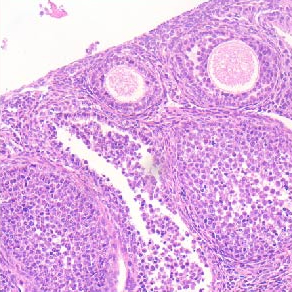
Hippo signaling pathway has been reported that it participates in many events such as cell division, proliferation, differentiation, and programmed cell death. YAP (Yes-Associated Protein) is one of the key components of this pathway1. It has been reported that early life stress causes oxidative stress in the mouse ovary which can affect follicle development2. However, the molecular mechanisms underlying these problems caused by early life stress have not yet been elucidated. 180-min maternal deprivation and isolation model was applied to the experimental group every day between the 1st and 14th postnatal day3. In total of 6 newborn Wistar albino female rats were used as control (n=3) and experimental (n=3) groups. Tail blood was collected to determine the serum corticosterone level before and after stress conditions on 14th postnatal day whether early life stress had developed. The groups were sacrificed on the 55th postnatal day. The YAP expression level was evaluated for immunohistochemical analyses. When compared to the control group, the serum corticosterone levels were high (p<0.05) and YAP expressions increased in granulosa cells and corpus luteum of the experimental group (p<0.05). This study suggests that stress created in the early period may cause various errors as the ovaries enter the adulthood period. It is also thought that the Hippo pathway plays an active role in this process.
Downloads
Citations




How to Cite

This work is licensed under a Creative Commons Attribution-NonCommercial 4.0 International License.