P38 | THE ROLE OF SPEXIN IN COLORECTAL CANCER
J. Kiezun1, J. Godlewski1, M. Kiezun2, M. Gudelska1, K. Kisielewska1, A. E. Kowalczyk1, B. E. Krazinski1 | 1Department of Anatomy and Histology, School of Medicine, Collegium Medicum, University of Warmia and Mazury in Olsztyn, Poland; 2Department of Animal Anatomy and Physiology, Faculty of Biology and Biotechnology, University of Warmia and Mazury in Olsztyn, Poland
All claims expressed in this article are solely those of the authors and do not necessarily represent those of their affiliated organizations, or those of the publisher, the editors and the reviewers. Any product that may be evaluated in this article or claim that may be made by its manufacturer is not guaranteed or endorsed by the publisher.
Authors
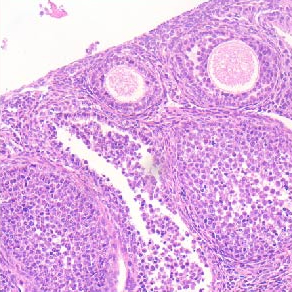
Spexin (SPX), a recently discovered member of the galaninergic system, acts through the receptors: GALR2 and GALR3. SPX is involved in the regulation of colonic functions; however, its role in colorectal cancer (CRC) has not been comprehensively studied. Given that our previous research implicated galanin receptors, but not galanin, in the pathogenesis of CRC, we aimed to investigate the potential contribution of SPX, an alternative GALR agonist, to this disease mechanism. SPX immunolocalization was evaluated in sections of noncancerous large intestine and CRC tumors derived from 5 patients using immunohistochemistry method (IHC-P). To quantify SPX levels, ELISA was performed on tissue homogenates obtained from 16 CRC patients. Tissue samples were carefully dissected and collected from five distinct regions: CRC, peritumoral mucosa with submucosa (pM+SM) and muscularis externa (pME), and matched samples from the distant, noncancerous part of the large intestine (dM+SM, dME). SPX concentrations were also measured in the sera collected from 53 CRC patients and 22 healthy controls. IHC-P revealed immunoexpression of SPX within the cytoplasm of CRC cells, enterocytes, goblet cells, stromal/immune cells, as well as in the submucosal and myenteric plexuses. Serum SPX levels did not differ significantly between CRC patients and healthy controls. Similarly, SPX concentrations in tissue homogenates collected from various regions of the large intestine and CRC tumors showed no significant variation. However, CRC patients without lymph node metastases (N0) exhibited significantly higher SPX levels in the pM+SM compared to patients with regional lymph node involvement (N1+N2). Interestingly, this relationship was not observed in dM+SM samples. High SPX levels may contribute to the protection of mucosal and submucosal stromal cells, potentially indicating a regulatory role of SPX in colonic function under pathological conditions. The mechanisms underlying SPX action in CRC and peritumoral tissues warrant further investigation.
This research was funded by the Minister of Science under the Regional Initiative of Excellence Program and School of Medicine statutory grant.
Downloads
Citations




Supporting Agencies
-Data Availability Statement
OAHow to Cite

This work is licensed under a Creative Commons Attribution-NonCommercial 4.0 International License.