P39 | NEW PERSPECTIVES FOR THE EXPLOITATION OF FEMALE REPRODUCTIVE POTENTIAL IN MAMMALS: GENERATION OF GRANULOSA-LIKE CELLS FROM HUMAN ADIPOSE MESENCHYMAL STEM CELLS
Y. Lacapra1, D. Farini1, G. Salvatore1, M.A. Ucci1, F.G. Klinger2, M. De Felici1, A. Camaio1 | 1Department of Biomedicine and Prevention, University of Rome Tor Vergata, Rome, Italy: 2Saint Camillus International University of Health Sciences, Rome, Italy
All claims expressed in this article are solely those of the authors and do not necessarily represent those of their affiliated organizations, or those of the publisher, the editors and the reviewers. Any product that may be evaluated in this article or claim that may be made by its manufacturer is not guaranteed or endorsed by the publisher.
Authors
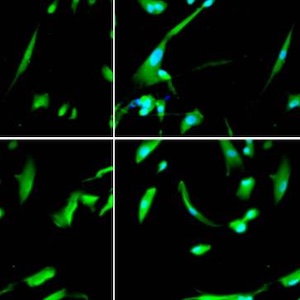
The aim of this innovative study is to generate human granulosa like cells (hGLCs) from human adipose mesenchymal stem cells derived induced pluripotent stem cells (hASC-iPSCs) or directly from hASCs whose embryonic origin is identical to granulosa cells (GCs). Previous work from our group has demonstrated that hASCiPSCs, and less efficiently hASCs, can generate human primordial germ cell-like cells (hPGCLCs)1. In the present work, by using a modification of a published protocol2, we generated hGLCs from hASC-iPSCs with a significant increase of the markers of mature GCs (FSHR, CYP19A1, AMH), whereas from hASCs, were upregulated transcripts of pre- or early GCs (FOXL2, FSHR, AMH). To verify their functional state, hiPSC-GLCs and hASC-GLCs were aggregated with 12.5 dpc mouse primordial germ cells (mPGCs) to have organoids in which, after 4 weeks of culture, significant number of germ cells, likely growing oocytes, were found, but with low efficiency. For this reason, two recent protocols3,4 developed in mouse were employed, with some modifications to adapt to our cells. According to the first study3, by using the appropriate cocktail of growth factors, hiPSCs should differentiate into GLCs by passing through a multistep protocol that includes epiblast, intermediate mesoderm, and coelomic epithelium, recapitulating the embryonic developmental stages. We successfully performed the first step and obtained epiblast-like cells confirmed by Brachyury’s expression. Based on the second study4, hASCiPSCs were cultured for 10 days with vitamin C and AM580 to induce directly GLCs differentiation. In this case, we observed evident morphological changes that suggest GC phenotype gaining. Experiments are in progress to complete both protocols, also starting from hASCs, and then proceed with mPGC/hGLC and hPGCLC/hGLC aggregate formation to generate primordial follicles.
Supported by the Italian MUR-PRIN No. 20209L8BN4.
Downloads
Citations




Supporting Agencies
-Data Availability Statement
OAHow to Cite

This work is licensed under a Creative Commons Attribution-NonCommercial 4.0 International License.