P53 | CIRCADIAN DEPENDENT MOTILITY: THE ROLE FOR THE PERINUCLEAR ACTIN CAP
E. Montacci1, M. Sgarzi2, L. Dall’Olio3, E. Giampieri4, D. Romaniello4, M. Lauriola5 | 1Department of Medical and Surgical Sciences, University of Bologna, Bologna, Italy; 2IRCCS Azienda Ospedaliero-Universitaria di Bologna, Bologna, Italy; 3Laboratory of Data Science and Bioinformatics, IRCSS Institute of Neurological Sciences, Bellaria Hospital, Bologna, Italy; 4Department of Medical and Surgical Sciences, University of Bologna, Bologna, Italy; 5Department of Medical and Surgical Sciences, University of Bologna, Bologna, Italy; IRCCS Azienda Ospedaliero-Universitaria di Bologna, Bologna, Italy
All claims expressed in this article are solely those of the authors and do not necessarily represent those of their affiliated organizations, or those of the publisher, the editors and the reviewers. Any product that may be evaluated in this article or claim that may be made by its manufacturer is not guaranteed or endorsed by the publisher.
Authors
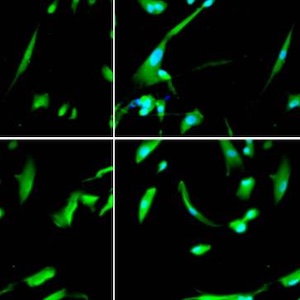
The circadian rhythm is responsible for the regulation of the daynight cycle by release of several factors, including the master regulator glucocorticoids (GCs). Previous studies reveal that the GCs dampen the transcriptional response to EGFR activation, by leading to the hypothesis of a nocturnal activation of the pathway1. In line, a recent study proved that the metastatic dissemination occurs preferentially during the rest phase and is controlled also by GCs2. In this work, we aim to analyze the circadian modulation of the quasi-normal epithelial cell line (MCF10A), upon dexamethasone (DEX) synchronization. We confirmed the oscillation of clock-related genes such as CLOCK and PER1 by mRNA analysis and BMAL1 by protein analysis. Interestingly, we observed a rhythmic production of EGFR, with an asynchronous upregulation of its negative feedback regulator ERRFI1. Notably, this interaction leads to decreased phosphorylation of EGFR, along with downstream signaling. The actin cap architecture has been described as a driver of cell dissemination3. Thus, we aim to mechanistically link nighttime spreading to circadian modulation of the actin cap via SUN1 regulation. Notably, we detected rhythmic oscillation of the SUN1 gene, which encodes a component of the LINC complex essential for anchoring the perinuclear actin cap4. So far, our data suggest that a circadian regulation of EGFR may influence SUN1 expression. Indeed, by employing MCF10A HER2+ cells, which lack EGFR oscillation, we observed a marked disruption of both clock-related genes and SUN1 expression compared to normal cells.
Downloads
Citations




Supporting Agencies
-Data Availability Statement
OAHow to Cite

This work is licensed under a Creative Commons Attribution-NonCommercial 4.0 International License.