P57 | SELONSERTIB (ASK1 INHIBITOR) IN SKIN TISSUE REPAIR OF OBESE MICE
V. Oliveira Collares Barbos, B. Romana de Souza | Department of Histology and Embriology, State University of Rio de Janeiro, Rio de Janeiro, Brazil
All claims expressed in this article are solely those of the authors and do not necessarily represent those of their affiliated organizations, or those of the publisher, the editors and the reviewers. Any product that may be evaluated in this article or claim that may be made by its manufacturer is not guaranteed or endorsed by the publisher.
Authors
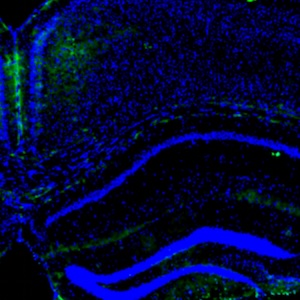
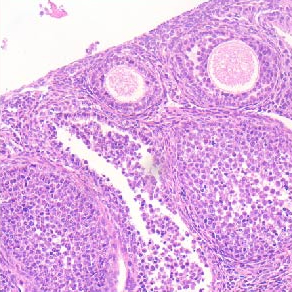
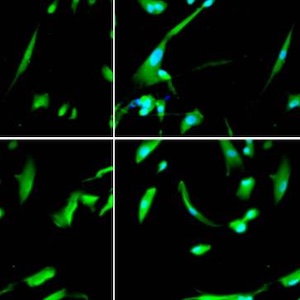
Obesity can impair skin wound healing due to an increase in the oxidative stress that activates apoptosis signal-regulating kinase 1 (ASK1), an enzyme involved in cell death pathways. This study aimed to investigate the effects of ASK1 inhibition on skin tissue repair of obese mice. Adult male C57BL/6 mice were fed with a high-fat and high-sucrose diet for eight weeks to induce obesity. After six weeks, two full-thickness excisional wounds were created on the dorsum of each animal. Wounds were treated with selonsertib, an ASK1 inhibitor, and tissue samples were collected eight days post-wounding. The study was approved by the Animal Ethics Committee (CEUA No. 038/2022). Obese animals showed increased body mass and epididymal fat, but the topical treatment with selonsertib did not alter those parameters. In addition, obese animals presented impaired wound healing compared to controls. Selonsertib treatment did not significantly alter wound closure rate. However, histological analysis revealed a higher granulation tissue formation in obese animals and a lower collagen fiber deposition, which was partially attenuated by selonsertib. Total and differential quantification of macrophages in the wound area was performed. Regarding total macrophages marked with F4/80, obese group showed a lower number of macrophages. However, topical treatment with selonsertib led to an increase in total macrophages in the obese animals eight days after wounding. In the analysis of M2 macrophages positive for arginase-1, obese group treated with selonsertib exhibited a higher number of antiinflammatory macrophages. Western blot showed an increase of ASK1 in obese animals, but the obese group treated with selonsertib showed a reduction in the parameter. These findings suggest that although ASK1 inhibitor does not improve obesogenic parameters and wound closure in obese mice, it can improve specific aspects of tissue repair, such as collagen deposition, inflammatory response and oxidative damage.
Downloads
Citations




Supporting Agencies
-Data Availability Statement
OAHow to Cite

This work is licensed under a Creative Commons Attribution-NonCommercial 4.0 International License.