P80 | MITOCHONDRIA-LYSOSOME INTERACTIONS: EMERGING PLAYERS IN GLIOMA
L. Zeppa1, M.B. Morelli2, C. Aguzzi2, M. Giangrossi2, M. Nabissi2, G. Cameli2, G. Santoni2, S.K. Tayebati2, V. Bellitto1, D. Tomassoni1, C. Amantini1 | 1School of Biosciences and Veterinary Medicine, University of Camerino, Camerino, Italy; 2School of Pharmacy, University of Camerino, Camerino, Italy
All claims expressed in this article are solely those of the authors and do not necessarily represent those of their affiliated organizations, or those of the publisher, the editors and the reviewers. Any product that may be evaluated in this article or claim that may be made by its manufacturer is not guaranteed or endorsed by the publisher.
Authors
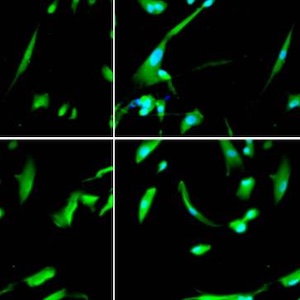
Despite research efforts, the results obtained in the therapy against glioma have improved but only slightly. For this reason, identifying new targets remains an important and necessary goal. The role of mitochondria, as potential target, has attracted considerable attention in recent times. Mitochondria and lysosomes communicate with each other through specialized membrane contact sites to regulate cellular metabolism and signaling pathways, impacting tumor cell survival and response to therapy1. Mitochondria dynamics play a crucial role in glioma pathophysiology, contributing to metabolic reprogramming, fast proliferation, invasion and drug resistance. It has been recently demonstrated that the mitochondrial structure and functions are regulated by the TRPML1 lysosomal channel by enabling the calcium flux from lysosomes to mitochondria2. To better investigate mitochondria in glioma progression, a potent TRPML1 agonist, ML-SA5 was used to stimulate Ca2+ influx into mitochondria in glioma cells. The activation of the lysosomal channel TRPML1 induces the production of mitochondrial reactive oxygen species, hyperpolarization of the mitochondrial membrane and cellular redistribution of these organelles. These changes are also associated with the activation of the mitochondrial enzyme P5Cs, the enhancement in collagen synthesis and increase of glioma migrating abilities. Overall, these preliminary results suggest that the interaction between lysosomes and mitochondria via TRPML1 represents a promising avenue to target mitochondrial dynamics for glioma therapeutic strategies.
Downloads
Citations




Supporting Agencies
-Data Availability Statement
OAHow to Cite

This work is licensed under a Creative Commons Attribution-NonCommercial 4.0 International License.