P84 | OMOMYC PEPTIDE LOCALIZES IN THE NUCLEUS AND DISPLAYS ANTIPROLIFERATIVE EFFECTS ON CELLULAR MODELS OF HUMAN OSTEOSARCOMA
I. Versari1, S. Salucci1, A. Bavelloni2, M. Traversari3, I. Faenza1 | 1Department of Biomedical and NeuroMotor Sciences, University of Bologna, Bologna, Italy; 2Laboratory of Experimental Oncology, IRCCS Istituto Ortopedico Rizzoli, Bologna, Italy; 3Department of Medical and Surgical Sciences, University of Bologna, Bologna, Italy
All claims expressed in this article are solely those of the authors and do not necessarily represent those of their affiliated organizations, or those of the publisher, the editors and the reviewers. Any product that may be evaluated in this article or claim that may be made by its manufacturer is not guaranteed or endorsed by the publisher.
Authors
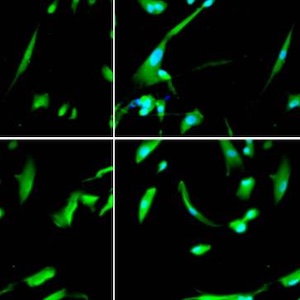
Osteosarcoma (OS) is the most common primary bone tumor affecting children and adolescents. It is characterized by irregular bone growth and common metastases, which determine its aggressiveness and poor outcomes1. Standard therapy includes a combination of chemotherapy and surgical resection; however, the overall survival rate has remained almost identical over the past thirty years. Therefore, there is a strong need to find novel approaches to the treatment of OS. Recently, c-Myc oncogene was proposed as potential therapeutic target, since it is frequently deregulated in cancer and it is commonly amplified in OS as well. The oncogene works as a pleiotropic transcription factor and it modulates cell growth, proliferation, apoptosis, and immune suppression2. Omomyc is a novel c-Myc inhibitor that acts as a dominant negative for c-Myc transcriptional activity2. In cellular models of human OS, we observed that Omomyc localizes exclusively in the nucleus, where it counteracts c-Myc activity by decreasing cell viability and modulating cellular signaling. In fact, our results demonstrate the involvement of signaling cascades related to cell proliferation and survival, including β-catenin and Akt-mTOR pathways. The outcomes of this study suggest that the inhibition of c-Myc exerted by Omomyc peptide reduces significantly cell growth and migration. Therefore, it represents a promising strategy in OS treatment.
Downloads
Citations




Supporting Agencies
-Data Availability Statement
OAHow to Cite

This work is licensed under a Creative Commons Attribution-NonCommercial 4.0 International License.