
MYELIN MAINTENANCE AND CELL VIABILITY: INVESTIGATING BECLIN 1 IN VIVO AND IN VITRO
Bertone F1, Russo L2, Jorkesh A2, Khodaparast S1, Gambarotta G1, Ronchi G1 and Cescon M2 | 1Department of Clinical and Biological Sciences, University of Torino, Torino, Italy; 2Department of Molecular Medicine, University of Padova, Padova, Italy
All claims expressed in this article are solely those of the authors and do not necessarily represent those of their affiliated organizations, or those of the publisher, the editors and the reviewers. Any product that may be evaluated in this article or claim that may be made by its manufacturer is not guaranteed or endorsed by the publisher.
Authors
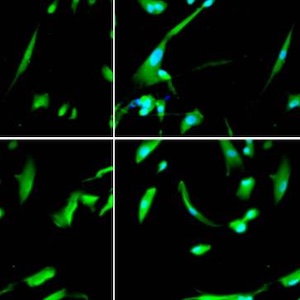
Schwann cells (SCs) of the peripheral nervous system (PNS) ensure axonal integrity and form the myelin sheath essential for nerve conduction. Autophagy is a key basic process in cell homeostasis that is involved in SC differentiation and cytoplasm reabsorption upon myelination as well as in myelin clearance (myelinophagy), following nerve injury. In this context, SCs revert to a repair phenotype: they de-differentiate, clear myelin debris, release cytokines that promote immune cell recruitment, and produce trophic factors supporting axonal regrowth. We recently demonstrated that Beclin 1, a core component of autophagy and endosomal trafficking, is crucial for Schwann cell maturation and peripheral nerve development, and its dysfunction induces in mice a severe demyelinating phenotype. Besides its role during development, Beclin 1 might be critical for both myelin maintenance and nerve regeneration in adulthood. To investigate the role of Beclin-1 in SCs in adulthood, an inducible, SC-specific knockout mouse line was generated by crossing Becn1f/f mice with P0- CreERT2 animals. Sciatic nerves were collected 4, 8, and 12 weeks after tamoxifen (TAM) or vehicle (VEH) administration. Becn1f/f and VEH-treated mice were used as controls. While no major histological differences were detected at 4 and 8 weeks, ultrastructural analyses at 8 weeks already revealed SC alterations. By 12 weeks, Becn1-deficient nerves exhibited reduced axonal and fiber diameters, thinner myelin sheaths, and increased overall nerve area. Myelinated fibers appeared disorganized, with enlarged interstitial spaces. Transmission electron microscopy confirmed the presence of autophagic vacuoles, vesiculation, cytoplasmic enlargement, and signs of myelin degradation. In vitro, rat SCs were transfected with Becn1 siRNAs. Western blot analysis confirmed Beclin 1 knockdown. Live-cell imaging showed reduced proliferation and Cytotox Dyes revealed increased cell death. Beclin 1 emerges as a key determinant of SC viability, proliferation, and myelin maintenance. Its loss causes early ultrastructural changes, later morphological defects and myelin degradation. Complementary in vitro findings confirm that Beclin 1 deficiency compromises SC growth and survival. Altogether, these results identify Beclin 1–regulated pathways as pivotal mechanisms in peripheral nerve homeostasis.
Downloads
Citations




How to Cite

This work is licensed under a Creative Commons Attribution-NonCommercial 4.0 International License.