71st Congress of the Italian Embryological Group-Italian Society of Development and Cell Biology (GEI-SIBSC)
Vol. 70 No. s1 (2026)

08 | HUMAN ADIPOSE STEM CELLS: IMPACT OF DONORS’ AGE ON CELL PROPERTIES AND BEHAVIOUR
Ludovica Barone1, Federica Rossi1, Federico Tamborini1, Christina Pagiatakis1|2, Roberto Papait1|2, Rosalba Gornati1 | 1Dept of Biotechnology and Life Sciences, University of Insubria, Varese, Italy; 2Dept of Cardiovascular Medicine, IRCCS Humanitas Research Hospital, Rozzano (MI), Italy
Publisher's note
All claims expressed in this article are solely those of the authors and do not necessarily represent those of their affiliated organizations, or those of the publisher, the editors and the reviewers. Any product that may be evaluated in this article or claim that may be made by its manufacturer is not guaranteed or endorsed by the publisher.
All claims expressed in this article are solely those of the authors and do not necessarily represent those of their affiliated organizations, or those of the publisher, the editors and the reviewers. Any product that may be evaluated in this article or claim that may be made by its manufacturer is not guaranteed or endorsed by the publisher.
Published: 22 June 2026
269
Views
93
Downloads
Authors
In this scenario, mesenchymal stem cells (MSCs) have proven to hold great promise for regenerative medicine applications. Among them, adipose stem cells (ASCs) are commonly used due to their easier accessibility with less invasive procedures. However, as observed for most MSCs, ASC properties may decline with increasing donor’s age.
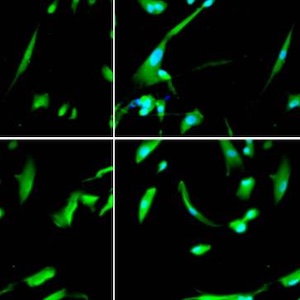
Therefore, in this study, we isolated ASCs from four age-defined donor groups; then, we evaluated, both in the single subjects and the pooled cells, the potential impairment of cell proliferation, oxidative stress, β-galactosidase and telomerase activity. Moreover, via qPCR analysis, optical and immunofluorescence microscopy, we assessed whether donors’ age could impact on stemness maintenance during passaging.
We also performed an mRNA analysis on those genes related to metabolism changes and cellular homeostasis maintenance.
The obtained results suggest that, though not being deeply affected by age, ASCs do exhibit slightly lower proliferation rates with age and a higher β-galactosidase activity, while oxidative stress and telomerase activity result unaltered throughout aging.
Noteworthy, ASCs exhibited an altered expression of those genes involved in the epigenetic regulation of gene expression and the glycolytic pathway, hinting at an interesting correlation between aging and a shift in the metabolic profile, for which future metabolomic and transcriptomic studies will be needed.
In conclusion, ASCs isolated from healthy, non-smokers donors, did not exhibit a significant decline in their behaviour throughout aging, suggesting that the donor’s health status may play a more relevant role than age in determining stem cell characteristics.
Downloads
Download data is not yet available.
Citations




How to Cite
1.
DELLO SVILUPPO E DELLA CELLULA G-SIDB. 08 | HUMAN ADIPOSE STEM CELLS: IMPACT OF DONORS’ AGE ON CELL PROPERTIES AND BEHAVIOUR: Ludovica Barone1, Federica Rossi1, Federico Tamborini1, Christina Pagiatakis1|2, Roberto Papait1|2, Rosalba Gornati1 | 1Dept of Biotechnology and Life Sciences, University of Insubria, Varese, Italy; 2Dept of Cardiovascular Medicine, IRCCS Humanitas Research Hospital, Rozzano (MI), Italy. Eur J Histochem [Internet]. 2026 Jun. 22 [cited 2026 Oct. 17];70(s1). Available from: https://www.ejh.it/ejh/article/view/4626
Copyright (c) 2026 The Author(s)


This work is licensed under a Creative Commons Attribution-NonCommercial 4.0 International License.