71st Congress of the Italian Embryological Group-Italian Society of Development and Cell Biology (GEI-SIBSC)
Vol. 70 No. s1 (2026)

35 | DISSECTING THE REGIONAL ORGANIZATION OF WIRING AND VOLUME TRANSMISSION IN THE SEROTONERGIC SYSTEM
G. Gianni, M. Picchi, S. Nazzi, S. Migliarini, N. Barsotti, M. Pasqualetti | Department of Biology, University of Pisa, Italy
Publisher's note
All claims expressed in this article are solely those of the authors and do not necessarily represent those of their affiliated organizations, or those of the publisher, the editors and the reviewers. Any product that may be evaluated in this article or claim that may be made by its manufacturer is not guaranteed or endorsed by the publisher.
All claims expressed in this article are solely those of the authors and do not necessarily represent those of their affiliated organizations, or those of the publisher, the editors and the reviewers. Any product that may be evaluated in this article or claim that may be made by its manufacturer is not guaranteed or endorsed by the publisher.
Published: 22 June 2026
160
Views
87
Downloads
Authors
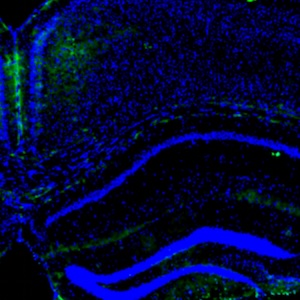
To address this issue, we investigated the organization of serotonergic projections in the mouse brain using complementary retrograde tracing approaches. A glycoprotein-deleted rabies virus, which infects neurons exclusively at presynaptic terminals, was used to selectively label 5-HT neurons establishing synaptic contacts in target areas (WT). In parallel, a pseudotyped rabies virus combined with a Cre-dependent helper adeno-associated virus enabled the retrograde labeling of 5-HT neurons independently of synaptic specializations, thus capturing the overall projecting population (WT + VT).
Comparative analyses across tracing strategies revealed the relative contribution of the two modalities, showing that different brain regions receive distinct proportions of WT- and VT-associated 5-HT inputs, and pointing to a heterogeneous and region-specific organization of serotonergic transmission.
In addition, ongoing analyses are addressing the molecular organization of 5-HT axonal varicosities using pre- and post-synaptic markers, to corroborate the viral tracing results and directly assess the presence and regional distribution of synaptic specializations at serotonergic release sites.
Taken together, these findings provide a first anatomical framework to dissect the regional balance between wiring and volume transmission in the mammalian serotonergic system, shedding light on how this signaling duality is spatially organized across the brain, with implications for understanding how the serotonergic system achieves its remarkable functional versatility.
Downloads
Download data is not yet available.
Citations




1. Agnati LF, Zoli M, Strömberg I, Fuxe K. Intercellular communication in the brain: wiring versus volume transmission. Neuroscience. 1995 Dec;69(3):711-26. DOI: https://doi.org/10.1016/0306-4522(95)00308-6
2. Gianni G, Pasqualetti M. Wiring and volume transmission: an overview of the dual modality for serotonin neurotransmission. ACS Chem Neurosci. 2023 Dec 6;14(23):4093-4104. DOI: https://doi.org/10.1021/acschemneuro.3c00648
How to Cite
1.
DELLO SVILUPPO E DELLA CELLULA G-SIDB. 35 | DISSECTING THE REGIONAL ORGANIZATION OF WIRING AND VOLUME TRANSMISSION IN THE SEROTONERGIC SYSTEM: G. Gianni, M. Picchi, S. Nazzi, S. Migliarini, N. Barsotti, M. Pasqualetti | Department of Biology, University of Pisa, Italy. Eur J Histochem [Internet]. 2026 Jun. 22 [cited 2026 Oct. 5];70(s1). Available from: https://www.ejh.it/ejh/article/view/4653
Copyright (c) 2026 The Author(s)


This work is licensed under a Creative Commons Attribution-NonCommercial 4.0 International License.