71st Congress of the Italian Embryological Group-Italian Society of Development and Cell Biology (GEI-SIBSC)
Vol. 70 No. s1 (2026)

61 | ROTENONE-INDUCED OXIDATIVE STRESS TRIGGERS PEROXISOMAL ALTERATIONS IN BV-2 MICROGLIAL CELLS
F. Rendina1, A. Valenza1, M. Muzzi2, D. Pensabene2, A. Fracassi3, M. Segatto2, S. Moreno1|3 | 1Dept. of Science, University Roma Tre, Rome, Italy. 2Dept. of Biosciences and Territory, University of Molise, Pesche, Italy. 3Dept. of Neurology, UTMB, Galveston, TX, USA
Publisher's note
All claims expressed in this article are solely those of the authors and do not necessarily represent those of their affiliated organizations, or those of the publisher, the editors and the reviewers. Any product that may be evaluated in this article or claim that may be made by its manufacturer is not guaranteed or endorsed by the publisher.
All claims expressed in this article are solely those of the authors and do not necessarily represent those of their affiliated organizations, or those of the publisher, the editors and the reviewers. Any product that may be evaluated in this article or claim that may be made by its manufacturer is not guaranteed or endorsed by the publisher.
Published: 22 June 2026
135
Views
88
Downloads
Authors
This study investigates how oxidative stress induced by the pesticide rotenone (Rot), a mitochondrial toxin, impacts the peroxisomal compartment in BV2 microglial cells, aiming to elucidate peroxisomes contribution within a Parkinsonian-like neuroinflammatory context.
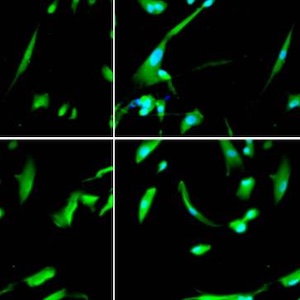
Rot treatment triggered a pro-inflammatory microglial phenotype, characterized by morphological changes, cytoskeletal disruption and oxidative damage to biomolecules. Notably, Rot induced a robust peroxisomal response, characterized by marked organelle proliferation, enlargement, and redistribution towards the perinuclear region. Consistent with such adaptive strategy, Rot exposure activated antioxidant defences and coordinated a metabolic shift towards enhanced lipid catabolism. The depletion of lipid droplets supports an increased reliance on peroxisome-dependent fatty acid processing as a critical survival mechanism under conditions of redox imbalance.
Overall, these findings underscore the remarkable plasticity of the peroxisomal compartment, demonstrating their capacity to cope with mitochondrial damage through morpho-functional remodelling. Peroxisomes engage an active, yet insufficient, adaptive response to fully restore homeostasis under sustained Rot-induced stress. These observations suggest that targeting peroxisomal pathways could serve as a potential strategy to mitigate the energetic dysmetabolism and neuroinflammatory processes associated with Parkinson’s Disease.
Acknowledgments: This work was supported by MIUR-Italy Grants of Departments of Excellence—L. 232/2016—art.1 cc. 314–337 awarded to the Department of Science of Roma Tre University (2023–2027).
Downloads
Download data is not yet available.
Citations




How to Cite
1.
DELLO SVILUPPO E DELLA CELLULA G-SIDB. 61 | ROTENONE-INDUCED OXIDATIVE STRESS TRIGGERS PEROXISOMAL ALTERATIONS IN BV-2 MICROGLIAL CELLS: F. Rendina1, A. Valenza1, M. Muzzi2, D. Pensabene2, A. Fracassi3, M. Segatto2, S. Moreno1|3 | 1Dept. of Science, University Roma Tre, Rome, Italy. 2Dept. of Biosciences and Territory, University of Molise, Pesche, Italy. 3Dept. of Neurology, UTMB, Galveston, TX, USA. Eur J Histochem [Internet]. 2026 Jun. 22 [cited 2026 Oct. 10];70(s1). Available from: https://www.ejh.it/ejh/article/view/4679
Copyright (c) 2026 The Author(s)


This work is licensed under a Creative Commons Attribution-NonCommercial 4.0 International License.