71st Congress of the Italian Embryological Group-Italian Society of Development and Cell Biology (GEI-SIBSC)
Vol. 70 No. s1 (2026)

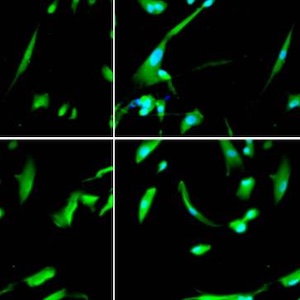
67 | DYNAMICS AND INTRACELLULAR TRAFFICKING OF M2R-DUALSTERIC AGONIST COMPLEX INTO GLIOBLASTOMA CELLS
G. Scanavino1, C. Metelli1, L. Sileo1, C. Dallanoce2, Matera2, AM. Tata1 | 1Dept. of Biology and Biotechnology, University of Rome “Sapienza”, Italy; 2Dept. of Pharmaceutical Sciences, University of Milan, Italy
Publisher's note
All claims expressed in this article are solely those of the authors and do not necessarily represent those of their affiliated organizations, or those of the publisher, the editors and the reviewers. Any product that may be evaluated in this article or claim that may be made by its manufacturer is not guaranteed or endorsed by the publisher.
All claims expressed in this article are solely those of the authors and do not necessarily represent those of their affiliated organizations, or those of the publisher, the editors and the reviewers. Any product that may be evaluated in this article or claim that may be made by its manufacturer is not guaranteed or endorsed by the publisher.
Published: 22 June 2026
157
Views
92
Downloads
Authors
Downloads
Download data is not yet available.
Citations




1. Cristofaro I, Spinello Z, Tata AM. Cholinergic system and its role in oligodendrocyte development and function. Neurochem Int. 2018 Aug;118:52-70. DOI: https://doi.org/10.1016/j.neuint.2018.04.010
2. Guerriero C, Manfredelli M, Matera C, Iuzzolino A, Conti L, Dallanoce C, et al. M2 Muscarinic Receptor Stimulation Induces Autophagy in Human Glioblastoma Cancer Stem Cells via mTOR Complex-1 Inhibition. Cancers (Basel). 2024;16(1):25. DOI: https://doi.org/10.3390/cancers16010025
How to Cite
1.
DELLO SVILUPPO E DELLA CELLULA G-SIDB. 67 | DYNAMICS AND INTRACELLULAR TRAFFICKING OF M2R-DUALSTERIC AGONIST COMPLEX INTO GLIOBLASTOMA CELLS: G. Scanavino1, C. Metelli1, L. Sileo1, C. Dallanoce2, Matera2, AM. Tata1 | 1Dept. of Biology and Biotechnology, University of Rome “Sapienza”, Italy; 2Dept. of Pharmaceutical Sciences, University of Milan, Italy. Eur J Histochem [Internet]. 2026 Jun. 22 [cited 2026 Oct. 9];70(s1). Available from: https://www.ejh.it/ejh/article/view/4685
Copyright (c) 2026 The Author(s)


This work is licensed under a Creative Commons Attribution-NonCommercial 4.0 International License.