71st Congress of the Italian Embryological Group-Italian Society of Development and Cell Biology (GEI-SIBSC)
Vol. 70 No. s1 (2026)

77 | TARGETING P75NTR CORRECTS OXIDATIVE AND INFLAMMATORY IMBALANCES IN A CELLULAR MODEL OF RETT SYNDROME
M. Varone, M. Colardo, N. Martella, D. Pensabene, E. Bisesto, M. Segatto | Dept of Biosciences and Territory, University of Molise, Pesche, Italy
Publisher's note
All claims expressed in this article are solely those of the authors and do not necessarily represent those of their affiliated organizations, or those of the publisher, the editors and the reviewers. Any product that may be evaluated in this article or claim that may be made by its manufacturer is not guaranteed or endorsed by the publisher.
All claims expressed in this article are solely those of the authors and do not necessarily represent those of their affiliated organizations, or those of the publisher, the editors and the reviewers. Any product that may be evaluated in this article or claim that may be made by its manufacturer is not guaranteed or endorsed by the publisher.
Published: 22 June 2026
182
Views
75
Downloads
Authors
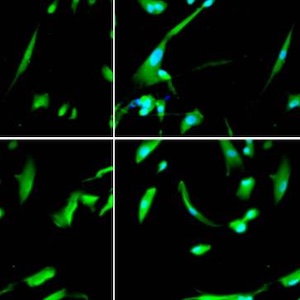
The present study explores the impact of modulating the p75 neurotrophin receptor (p75NTR) through the small molecule LM11A-31 in fibroblasts obtained from RTT patients. To this end, cells were treated with 0.1 μM LM11A-31 for 24 hours, followed by molecular and biochemical analyses performed using qPCR, immunofluorescence, ELISA, and Western blot.
The data obtained indicate that LM11A-31 markedly reduces oxidative stress in RTT-derived cells. More specifically, modulation of p75NTR signaling restored the physiological levels of protein glutathionylation and decreased the expression of the pro-oxidant enzyme NADPH oxidase 4 (NOX4). In parallel, LM11A-31 treatment led to a reduction in pro-inflammatory cytokine levels and to the normalization of transcription factors that regulate antioxidant defenses and inflammatory responses.
Taken together, these results point to the potential of p75NTR-targeting compounds as therapeutic tools to counteract oxidative imbalance and inflammation in RTT. By intervening on central molecular mechanisms underlying the disorder, p75NTR modulation could represent a more integrated therapeutic approach. Additional studies will be necessary to clarify the mechanisms involved and to confirm these effects across different experimental models.
Downloads
Download data is not yet available.
Citations




How to Cite
1.
DELLO SVILUPPO E DELLA CELLULA G-SIDB. 77 | TARGETING P75NTR CORRECTS OXIDATIVE AND INFLAMMATORY IMBALANCES IN A CELLULAR MODEL OF RETT SYNDROME: M. Varone, M. Colardo, N. Martella, D. Pensabene, E. Bisesto, M. Segatto | Dept of Biosciences and Territory, University of Molise, Pesche, Italy. Eur J Histochem [Internet]. 2026 Jun. 22 [cited 2026 Oct. 11];70(s1). Available from: https://www.ejh.it/ejh/article/view/4695
Copyright (c) 2026 The Author(s)


This work is licensed under a Creative Commons Attribution-NonCommercial 4.0 International License.