PERICYTE INVOLVEMENT IN THE PATHOGENESIS OF COLVI-RELATED MYOPATHIES: INSIGHTS INTO NG2–COLVI AXIS
A. Fazio1, C. Evangelisti1, P. Sabatelli2, A. Cappellini1, A. Di Martino3, C. Faldini3, L. Manzoli1, S. Ratti1 | 1Cellular Signalling Laboratory, University of Bologna, DIBINEM, Bologna, Italy; 2CNR Institute of Molecular Genetics «Luigi Luca Cavalli-Sforza”, Unit of Bologna, Bologna, Italy; 3IRCCS Istituto Ortopedico Rizzoli, Bologna, Italy
All claims expressed in this article are solely those of the authors and do not necessarily represent those of their affiliated organizations, or those of the publisher, the editors and the reviewers. Any product that may be evaluated in this article or claim that may be made by its manufacturer is not guaranteed or endorsed by the publisher.
Authors
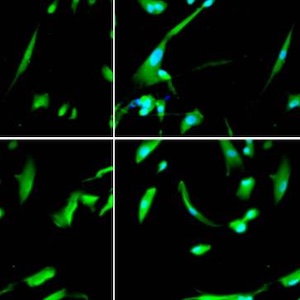
Pericytes are multifunctional mesenchymal stem cells with myogenic potential, strategically located within the microvascular niche, where they contribute to vascular homeostasis and support skeletal muscle regeneration1. Their capacity to differentiate into myogenic lineages and coordinate repair processes positions them as key players in tissue regeneration. However, their involvement in collagen VI-related myopathies (COLVI-RMs) remains unexplored. This study investigates the contribution of pericytes to COLVI-RM pathogenesis, with a focus on the interaction between COLVI and neural/glial antigen 2 (NG2), a proteoglycan involved in COLVI anchoring at the cell membrane2. Morphological and ultrastructural analyses of muscle biopsies from COLVI-RM patients revealed altered pericyte distribution and thickening of the capillary basement membrane compared to healthy controls. In vitro, pericyte cultures from COLVI-RMs patients showed defective COLVI deposition in the extracellular matrix (ECM), with impaired anchoring to the cell surface, due to a disrupted interaction COLVI-NG2. Of note, COLVI-RM pericytes exhibited a shift toward a quiescent state, with reduced activation of proliferative pathways and upregulation of quiescent markers, consistent with an altered activation profile. In line with these findings, in vitro inhibition of COLVI–NG2 binding in control pericytes reproduced these alterations, confirming the functional relevance of this molecular axis. Collectively, our findings identify pericyte dysfunction as a potential contributor to the pathophysiology of COLVI-RMs, suggesting that targeting pericytes may offer a novel therapeutic strategy to enhance muscle regeneration in these diseases.
Downloads
Citations




Supporting Agencies
-Data Availability Statement
OAHow to Cite

This work is licensed under a Creative Commons Attribution-NonCommercial 4.0 International License.