ANIMAL MODELS OF METASTATIC CANCER - ADVANCED IMAGE ANALYSIS FOR DISSECTION OF DRIVING SIGNALING PATHWAYS
S. Alberti | University of Messina, Messina, Italy
All claims expressed in this article are solely those of the authors and do not necessarily represent those of their affiliated organizations, or those of the publisher, the editors and the reviewers. Any product that may be evaluated in this article or claim that may be made by its manufacturer is not guaranteed or endorsed by the publisher.
Authors
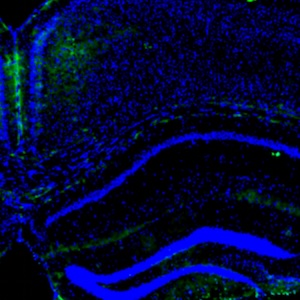
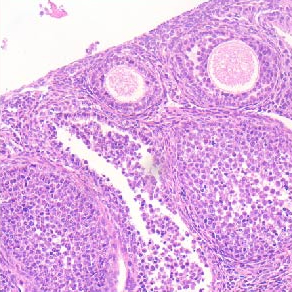
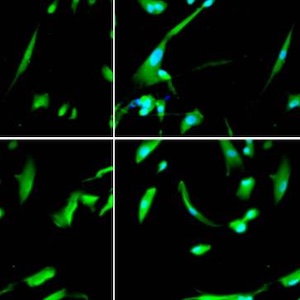
The identification of decisive drivers of metastasis is an urgent medical need. The characterization of cancer-specific signaling hubs may allow to identify molecular targets for tailored therapeutic interventions. Multi-layered analyses of Trop-2 molecular signaling were conducted using transcriptome profiling and proteomic analyses in colorectal cancer patients and in preclinical models of colon cancer. Dynamic confocal microscopy, FRET, FLIM, electron microscopy and image analysis were utilized to identify signaling complexes for high-dimensional signaling for cancer cell growth. Recursive coalescence of signal transducers at cell membrane macroplatforms was shown to drive kinase, calcium and phosphoinositide signaling for cell growth. Macroscopic coalescence was shown for trans-membrane signal transducers (Trop-1, Trop-2, EGFR, CD9, CO-029, CD98), cytoplasmic effectors (Grb-2, PKCα, ERK, PI3K, Akt) and cytoskeletal components (βactin, ezrin, α-actinin). Trop-2 clustering was shown to lead to release of Ca2+ from internal stores, activation of Ca2+-dependent PKCa by mTORC2 and PKCa-mediated phosphorylation of the Trop-2 cytoplasmic tail. This induced remodeling of the β-actin cytoskeleton, activation of Akt and ERK and phosphoinositide signaling, for enhanced cancer cell growth. Binding to Trop-2 was shown to cause cleavage of E-cadherin with release from the cytoskeleton, loss of cell-cell adhesion and activation of β-catenin. This induced cell migration, tissue invasion and resistance to apoptosis. wtTrop-2 increased the metastatic capacity of KM12SM colon cancer cells to 90% of tested xenotransplants with massive metastatic growth in the liver. This global, Trop-2/E-cadherin/β-catenin-driven pro-metastatic program was recapitulated in cancer patients, and was shown to impact on breast, colon, ovary, uterus cancer metastatic relapse and overall patient survival. A signaling axis triggered by Trop-2 defines key control hubs for cancer growth and metastatic diffusion, and identifies specific molecular targets for tailored therapeutic interventions
Downloads
Citations




Supporting Agencies
-Data Availability Statement
OAHow to Cite

This work is licensed under a Creative Commons Attribution-NonCommercial 4.0 International License.