SUMOYLATION AS AN EARLY ADAPTIVE MECHANISM IN THE PROTEOMIC RESPONSE OF HUMAN GERM CELLS TO SIMULATED MICROGRAVITY
A. Di Pauli1, G. Ricci2, M. Crescenzi3, M. A. Mariggiò4, C. Morabito4, L. Gesualdi1, M. Berardini1, F. Ferranti5, M. Signore6, A. Catizone1 | 1Department of Anatomy, Histology, Forensic-Medicine and Orthopedics, Section of Histology and Embryology, «Sapienza» University, Rome, Italy; 2Department of Experimental Medicine, University «Luigi Vanvitelli», Naples, Italy; 3Core Facilities, Italian National Institute of Health, Rome, Italy; 4Department of Neuroscience, Imaging and Clinical Sciences CAST, «G. d’Annunzio» University, Chieti, Italy; 5Human Spaceflight and Scientific Research Unit, Italian Space Agency, Rome, Italy; 6RPPA unit, Proteomics, Italian National Institute of Health, Rome, Italy
All claims expressed in this article are solely those of the authors and do not necessarily represent those of their affiliated organizations, or those of the publisher, the editors and the reviewers. Any product that may be evaluated in this article or claim that may be made by its manufacturer is not guaranteed or endorsed by the publisher.
Authors
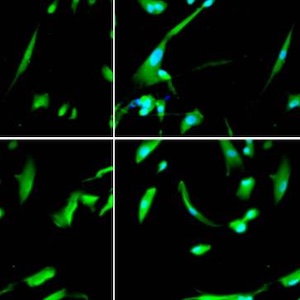
The growing accessibility of space travel highlights the need to deeper understand how altered gravitational environments affect human physiology, and in this context reproductive health. This study analyses the effects of simulated microgravity (SμG) and hypogravity (ShG) on different pathways including SUMOylation (Small Ubiquitin-like Modifier) in human male germ cell line TCam-2, combining Reverse-Phase Protein microArrays (RPPA) and immunofluorescence. SUMO isoforms 1–4 are members of ubiquitin-related protein family that regulate transcription factors, DNA repair, cytoskeleton dynamics, stress, proliferation, and apoptosis responses[1-2. TCam-2 cells were subjected to SμG and ShG using a Random Positioning Machine for 3, 24, and 72 h. RPPA profiled alterations in key signaling pathways while immunofluorescence was subsequently performed to analyze the subcellular localization of SUMO2/3. RPPA analysis showed that 3h of SμG upregulated proteins related to cell cytoskeleton composition, proliferation, and apoptosis. Among them we focused on SUMO2/3. Prolonged exposure to SμG (24 h–72 h) did not alter SUMO2/3 expression, despite ongoing pathway alterations. Simulated ShG caused milder changes without affecting SUMO2/3. Immunofluorescence analysis after 3h of SμG revealed increased SUMO2/3 signal with enhanced nuclear localization. In line with previously reported data3-4, we confirm TCam-2 sensitivity to microgravity. The early upregulation of SUMO2/3 and its increased nuclear localization in 3h SμG exposure led us to hypothesize that SUMOylation is an early response to the stress induced by microgravity. At 24 h to 72 h, SUMO2/3 protein levels remain comparable to those observed under unitary gravity (1g), highlighting the resilience and adaptive capacity of TCam-2. Further investigations are necessary to clarify the relationship between SUMO2/3 and the observed changes in proteins involved in cytoskeletal organization, proliferation, and apoptotic pathways.
Downloads
Citations




Supporting Agencies
-Data Availability Statement
OAHow to Cite

This work is licensed under a Creative Commons Attribution-NonCommercial 4.0 International License.