FROM PIXELS TO DIAGNOSIS: A DEEP LEARNING FRAMEWORK FOR HISTOPATHOLOGICAL IMAGE ANALYSIS IN CANINE TESTICULAR PATHOLOGY
L. Riccio1, E. Formisano2, M. De Falco3, S. Balsamo3, P. Formisano4, E. Di Napoli1, G. Piegari1, O. Paciello1, L. Rosati3 | 1Department of Veterinary Medicine and Animal Production, University of Naples “Federico II”, Naples, Italy; 2Department of Cognitive Neuroscience, Faculty of Psychology, Universiteit Maastricht, Postbus 616, The Netherlands; 3Department of Biology, University of Naples Federico II, Naples, Italy; 4Department of Translational Medicine, University Federico II, Naples, Italy
All claims expressed in this article are solely those of the authors and do not necessarily represent those of their affiliated organizations, or those of the publisher, the editors and the reviewers. Any product that may be evaluated in this article or claim that may be made by its manufacturer is not guaranteed or endorsed by the publisher.
Authors
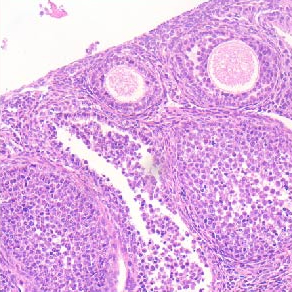
Canine testis pathology encompasses a range of disorders affecting the structure and function of the testes with significant implications for fertility, hormonal balance, and overall health. Common pathologies include testicular neoplasms, orchitis, testicular torsion, cryptorchidism, and degenerative changes. Histopathological definition of testicular pathologies may be prone to inter-observer variability, thus leading to an erroneous diagnosis or to the exclusion of differential concurrent alteration. We propose an artificial intelligence-based computational pathology approach to automate the discrimination of different testicular developmental, inflammatory or degenerative pathologies and the main testicular neoplasms (Seminoma, Sertolioma, Leydigoma). This computational approach is based on a deep learning pipeline that integrates convolutional neural networks, multi-class histological segmentation, and spatial attention via Grad-CAM maps to acquire and interpret complex morphological structures in haematoxylin-eosin-stained slides.1 We created a histological whole-slide image dataset (N=400 slides) by collecting samples of healthy, pathological non-neoplastic and neoplastic testes from the archive of DIPSA laboratory of University of Naples Federico II. We fine-tuned the model on a proprietary dataset of testicular tissue sections, annotated by two pathologists. While quantitative performance metrics are still under systematic evaluation, preliminary findings indicate that the model exhibits highly promising behaviour in accurately distinguishing between nonneoplastic and neoplastic cases, as well as between tumour subtypes. The incorporation of saliency mapping has enhanced the consistency of predictions, offering a level of interpretability that supports pathological validation. Our preliminary results suggest that the automated system may have a remarkable potential to assist pathologists in the diagnostic process and to reduce interobserver variability, also allowing for better standardisation of the process.
Downloads
Citations




Supporting Agencies
-Data Availability Statement
OAHow to Cite

This work is licensed under a Creative Commons Attribution-NonCommercial 4.0 International License.