
Genetic deletion of P-selectin prevents fibrosis development by inhibiting the neutrophil megakaryocyte emperipolesis in the Gata1low mouse model for myelofibrosis
All claims expressed in this article are solely those of the authors and do not necessarily represent those of their affiliated organizations, or those of the publisher, the editors and the reviewers. Any product that may be evaluated in this article or claim that may be made by its manufacturer is not guaranteed or endorsed by the publisher.
Authors
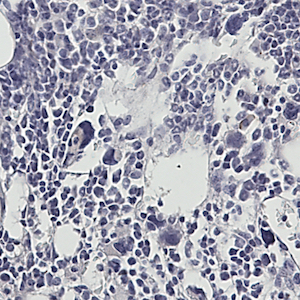
Myelofibrosis (MF) is a rare chronic hematological disorder, within the family of myeloproliferative neoplasms. The MF patients present clinical abnormalities such as anemia, and thrombosis, as well as alterations in the bone marrow (BM) microenvironment, an increased number of megakaryocytes (MKs), most of which are found in emperipolesis with neutrophils. In MF, the MKs emperipolesis is induced by an altered MK secretome, containing increased levels of pro-inflammatory cytokines, proteins, and growth factors such as interleukin-8 (IL-8) and P-selectin (P-sel). These, allow the altered cell-to-cell interactions and cause the transforming growth factor-β (TGF-β) to be released into the BM microenvironment. This fibrogenic cytokine contributes to BM fibrosis and disease progression. Emperipolesis has already been identified as a pathobiological event that contributes to MF and it is widely recognized in the most advanced stages of the disease. In this study, we evaluated the role of P-sel in BM alterations associated with emperipolesis in the Gata1low mouse model of MF. Our data show that emperipolesis is driven by P-sel. Genetic ablation of P-sel rescued the BM microenvironment, by decreasing fibrosis, suggesting that pharmacological targeting of P-sel could contribute to reduce the BM dysfunction and disease progression.
Downloads
Citations




Supporting Agencies
this study was supported by grants from the PRIN2022How to Cite

This work is licensed under a Creative Commons Attribution-NonCommercial 4.0 International License.