
GLIAL INFLAMMASOME ACTIVATION AND BLOOD-BRAIN BARRIER BREAKDOWN IN AGE-RELATED NEURODEGENERATION
Errede M1, Girolamo F1, d’Amati A1,2, de Giorgis M1, Lorusso L1, Pierucci C3, Bernardini N3, Pellegrini C3, Virgintino D1 and Annese T2 | 1University of Bari, Department of Translational Biomedicine and Neuroscience – Human Anatomy and Histology Unit, Bari, Italy; 2Libera Università del Mediterraneo (LUM) Giuseppe Degennaro University, Department of Medicine and Surgery, Bari, Italy; 3University of Pisa, Department of Clinical and Experimental Medicine - Unit of Histology and Medical Embryology, Pisa, Italy
All claims expressed in this article are solely those of the authors and do not necessarily represent those of their affiliated organizations, or those of the publisher, the editors and the reviewers. Any product that may be evaluated in this article or claim that may be made by its manufacturer is not guaranteed or endorsed by the publisher.
Authors
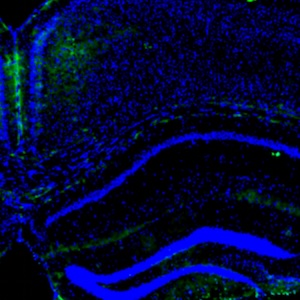
Blood-brain barrier (BBB) breakdown, characterized by the disruption of endothelial tight junctions (TJs), is an early pathogenic event in aging-related neurodegenerative diseases, where neuroinflammation plays a key role. Activation of the NLRP3 inflammasome in glial cells represents a major inflammatory hub contributing to this process. However, its precise role in BBB dysfunction and its potential as a therapeutic target remain to be fully elucidated. In the present study, senescence-accelerated SAMP8 mice and SAMR1 controls were used as models of BBB impairment. Confocal immunofluorescence analysis of brain sections was performed to assess the tight junction proteins occludin and claudin- 5, as well as the inflammasome components NLRP3 and ASC in GFAP+ astrocytes and IBA1+ microglia. The effects of two immunomodulatory treatments–the selective NLRP3 inhibitor MCC950 and interferon-gamma (IFN-γ) – were subsequently evaluated. SAMP8 mice exhibited downregulation and a discontinuous staining pattern of occludin and claudin-5, paralleled by inflammasome activation, including upregulation of NLRP3 and ASC in both reactive astrocytes and microglia. Both MCC950 and IFN-γ treatments partially restored BBB integrity, improving TJ staining pattern and protein expression in both microvessels and larger vessels. Structural recovery of TJs correlated with a significant reduction in NLRP3 expression and ASC speck formation in glial cells. These findings demonstrate that glial inflammasome activation is a key driver of BBB structural failure in this aging model. The partial restoration of TJ architecture following inflammasome inhibition with MCC950 or immunomodulation with IFN-γ confirms the link between neuroinflammation and vascular pathology. Overall, this study identifies the NLRP3 inflammasome pathway as a critical therapeutic target to preserve BBB integrity in age-related neurodegeneration.
Downloads
Citations




How to Cite

This work is licensed under a Creative Commons Attribution-NonCommercial 4.0 International License.