
MULTI SCAFFOLD 3D-BIOPRINTED MODEL OF SPINAL CORD ARCHITECTURE IN VITRO
Chasseur S1, Traldi C2,3,4, Chiappini V1, Tonda-Turo C2,3,4 and Boido M1 | 1Department of Neuroscience «Rita Levi Montalcini», Neuroscience Institute Cavalieri Ottolenghi, University of Turin, Turin, Italy; 2Department of Mechanical and Aerospace Engineering, Politecnico di Torino, Turin, Italy; 3POLITO BIOMedLAB, Politecnico di Torino, Turin, Italy; 4Interuniversity Center for the promotion of the 3Rs principles in teaching and research, Italy
All claims expressed in this article are solely those of the authors and do not necessarily represent those of their affiliated organizations, or those of the publisher, the editors and the reviewers. Any product that may be evaluated in this article or claim that may be made by its manufacturer is not guaranteed or endorsed by the publisher.
Authors
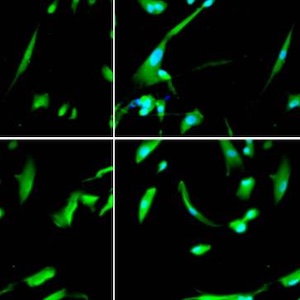
Recreating physiologically relevant spinal cord models in vitro requires not only appropriate cell types but also structural and topographical cues that mimic native tissue. While 2D cultures fail to reproduce the spatial complexity of the central nervous system, 3D bioprinting strategies enable more realistic neural microenvironments. We aim to develop a 3D spinal cord model by combining murine cell lines or human stem cell–derived neural progenitors with a multi-material scaffold system. Murine neuronal/astrocytic (NE-4C) and motor neuron-like (NSC-34) cells were embedded in gelatin methacrylate (GelMA) hydrogels and layered on aligned polycaprolactone (PCL) microfibers produced by Melt Electrowriting via extrusion-based bioprinting. The matrix supported long-term viability, proliferation, and differentiation: neuronal (MAP2, βIII-tubulin) and glial (GFAP) markers increased progressively over 14-21-28 days in vitro (DIV), confirmed by immunofluorescence and western blot, and spontaneous network activity was detected through calcium imaging. In parallel, human neural progenitor cells (NPCs) derived from induced pluripotent stem cells (iPSCs) were successfully differentiated and later cultured within a composite hydrogel composed of GelMA and Geltrex for 7, 10, and 14 DIV. The NPCs expressed SOX2 and nestin, confirming their neural progenitor identity, and exhibited a characteristic rosette- like morphological organization, indicative of early neuroepithelial architecture. Over time, they showed high viability and progressive neuronal maturation, with MAP2, βIIItubulin, and synapsin expression suggesting neuronal interconnection and emerging network formation. This preliminary 3D system might represent a versatile and biomimetic platform for modeling spinal cord structure and function, with translational potential for studies on spinal cord injury, neurodegeneration, and physiologically relevant drug screening.
The work was supported by Fondazione CRT and the European Union – Next Generation EU within the PRIN 2022 program (D.D. 104 – 02/02/2022, Ministero dell’Università e della Ricerca).
Downloads
Citations




How to Cite

This work is licensed under a Creative Commons Attribution-NonCommercial 4.0 International License.