
THE LINK BETWEEN NEURONAL BRANCHING AND PAIN
Dotta S1, Muraglia L1, Musso G1, Rother F2,3, Pritz. C1, Luzzati F1, Bader M2,3,4, Buffo A1, Vercelli A1 and Marvaldi L1 | 1Department of Neuroscience Rita Levi Montalcini, Neuroscience Institute Cavalieri Ottolenghi, University of Turin, Orbassano (TO), Italy; 2Max Delbrück Center for Molecular Medicine, Berlin, Germany; 3Center for Structural and Cellular Biology in Medicine, Institute of Biology, University of Lübeck, Germany; 4Charité, Universitätsmedizin, Berlin, Germany
All claims expressed in this article are solely those of the authors and do not necessarily represent those of their affiliated organizations, or those of the publisher, the editors and the reviewers. Any product that may be evaluated in this article or claim that may be made by its manufacturer is not guaranteed or endorsed by the publisher.
Authors
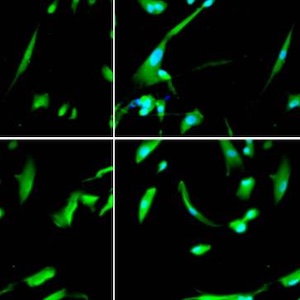
In the human body, axons can extend up to a meter in length, making efficient intracellular transport essential for maintaining neuronal function and growth. During development or after injury, neurons tend to elongate rapidly, forming long axons with limited branching. As neurons mature, axonal growth slows while branching increases, promoting the formation of complex neural networks. However, the efficiency of a neuron that continues to grow and branch depends on its ability to support local protein synthesis and long-distance signaling, both of which rely on retrograde transport mechanisms. In this study, we investigated how neuronal branching efficiency changes with aging and injury, and how these processes relate to pain sensitivity. Using importin α3 knockout (KO) mice, we examined the role of retrograde transport in axonal branching. Importin α3 KO mice display reduced pain perception in both young and aged animals. Analysis of primary DRG neurons cultured from young and old wild-type (WT) males revealed increased branching in aged WT neurons. In contrast, aged Imp α3 KO neurons exhibited significantly reduced neurite outgrowth and branching. These findings suggest that enhanced branching in aged WT neurons may contribute to increased pain sensitivity, possibly through heightened synaptic connectivity or excitability. Interestingly, in young animals, KO neurons showed increased axonal outgrowth and branching, particularly after in vitro injury compared to WT neurons. This indicates that growth capacity is higher in young neurons but not necessarily associated with increased pain perception. In conclusion, young and aged neurons exhibit distinct capacities for axonal plasticity and pain perception, which can be modulated by impairing retrograde signaling transport. These findings suggest that targeting retrograde transport pathways, such as importin α3-mediated signaling, may represent a potential strategy to modulate neuronal growth and pain sensitivity across aging.
Downloads
Citations




How to Cite

This work is licensed under a Creative Commons Attribution-NonCommercial 4.0 International License.