
DISTRIBUTION, DENSITY, AND PHYLOGENETIC VARIATION OF CORTICAL IMMATURE NEURONS IN MACAQUES (RHESUS MONKEY)
Pattaro A1,2, Sherwood CC3 and Bonfanti L1,2 | 1Neuroscience Institute Cavalieri Ottolenghi (NICO), Regione Gonzole 10, Orbassano (TO), Italy; 2Department of Veterinary Sciences, University of Turin, Grugliasco (TO), Italy; 3Department of Anthropology and Center for the Advanced Study of Human Paleobiology, The George Washington University, Washington DC, USA
All claims expressed in this article are solely those of the authors and do not necessarily represent those of their affiliated organizations, or those of the publisher, the editors and the reviewers. Any product that may be evaluated in this article or claim that may be made by its manufacturer is not guaranteed or endorsed by the publisher.
Authors
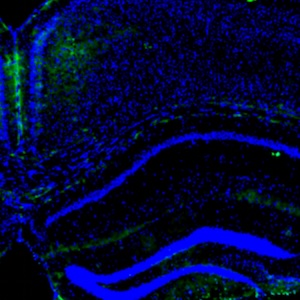
Brain structural plasticity, especially neurogenic processes, vary across species, anatomical regions, and ages. In addition to stem cell-driven adult neurogenesis, a form of “neurogenesis without division” has been recently shown, involving “immature” or “dormant” neurons in the cortical layer II (cortical immature neurons, cINs). These cells are prenatally generated and remain in a state of “arrested maturation”, retaining the ability to resume maturation at different life stages and functional integrate into pre-existing circuits. Previous quantification of cINs in widely different mammals showed high abundance of these cells in large-brained species with respect to rodents, and covariation with brain size and neocortical expansion. Here, using the same approach (immunocytochemical detection of the cytoskeletal protein doublecortin, after establishing correspondent neuroanatomical levels in each species), we characterized and quantified the cINs in macaques (Rhesus monkey), a primate with human-like brain anatomy, phylogenetics, and cognitive functions. First, we studied the cIN density in 4 young adult macaques (7-10 years) to understand their position in the phylogenetic variation. Our results place them among the gyrencephalic species and confirm the covariance between cIN density and both increased brain size and neocortical expansion. Then, we used 11 middle-aged macaques (23 years) to quantify the cIN density across 16 neuroanatomically defined cortical regions in search for possible regional variation. Significant differences were observed, with the highest presence in the medial and inferior temporal cortex. Overall, it is confirmed that cINs follow an evolutionary trend in mammals, involving the entire cortical mantle in gyrencephalic species, yet, with regional differences. Previous studies reported high amount of doublecortin-positive cells in the temporal lobe of humans, thus supporting the value of macaque as a good translational model for studying cINs.
Downloads
Citations




How to Cite

This work is licensed under a Creative Commons Attribution-NonCommercial 4.0 International License.