Articles

The hematopoietic stem cells supportive megakaryocytes as shapers of the bone marrow niche
Publisher's note
All claims expressed in this article are solely those of the authors and do not necessarily represent those of their affiliated organizations, or those of the publisher, the editors and the reviewers. Any product that may be evaluated in this article or claim that may be made by its manufacturer is not guaranteed or endorsed by the publisher.
Published: 16 December 2025
134
Views
88
Downloads

Authors

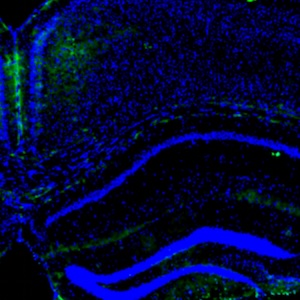
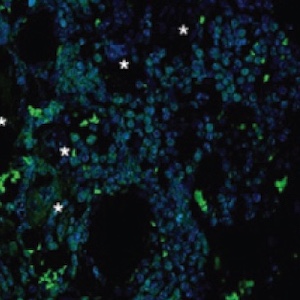
The bone marrow (BM) niche plays a pivotal role in regulating the fate of hematopoietic stem cells (HSCs), and its integrity changes significantly during aging and in rare hematological disease, as in myelofibrosis (MF). In this study, we investigated how the localization and dynamics of HSCs are influenced under physiological and pathological conditions by a newly identified by HSC-supportive megakaryocytes (MKs) subpopulation. Using huCD34tTA/TetO-H2BGFP reporter mice, we analyzed HSCs distribution within the BM and quantified nuclear green fluorescent protein (GFP) intensity to assess the repopulating potential of aged controls and mutated Gata1low mice for MF. In the control group of aged mice, cells with high levels of GFP are clustered, and adjacent to cells morphologically identifiable as supportive MKs. These clusters displayed homogeneous GFP intensity, indicating that HSCs with similar functional properties tend to co-localize in proximity to supportive MKs. By contrast, in aged huCD34/TET/Gata1low mice, GFP cells were predominantly isolated and showed reduced fluorescence intensity. Although the frequency of MKs with a supportive phenotype was increased in MF mice, analyses of GFP revealed that the ability of these MKs to maintain the HSCs in their niche was significantly impaired. Our results provide new insights on the maladaptive remodeling of the BM niche. They highlight the supportive role of MKs as potential key regulators of HSCs homeostasis. Despite their numerical expansion in MF, these cells are functionally compromised, thereby contributing to altered HSCs localization, mobilization, and to hematopoietic failure.

Downloads

Download data is not yet available.

Citations

1. Gao X, Xu C, Asada N, Frenette PS. The hematopoietic stem cell niche: from embryo to adult. Development 2018;145:dev139691.
2. Baccin C, Al-Sabah J, Velten L, Helbling PM, Grünschläger F, Hernández-Malmierca P, et al. Combined single-cell and spatial transcriptomics reveal the molecular, cellular and spatial bone marrow niche organization. Nat Cell Biol 2020;22:38-48.
3. Kokkaliaris KD, Kunz L, Cabezas-Wallscheid N, Christodoulou C, Renders S, Camargo F, et al. Adult blood stem cell localization reflects the abundance of reported bone marrow niche cell types and their combinations. Blood 2020;136:2296-307.
4. Bogeska R, Mikecin AM, Kaschutnig P, Fawaz M, Büchler-Schäff M, Le D, et al. Inflammatory exposure drives long-lived impairment of hematopoietic stem cell self-renewal activity and accelerated aging. Cell Stem Cell 2022;29:1273-84.e8.
5. Matteini F, Mulaw MA, Florian MC. Aging of the hematopoietic stem cell niche: new tools to answer an old question. Front Immunol 2021;12:738204.
6. Cook EK, Luo M, Rauh MJ. Clonal hematopoiesis and inflammation: Partners in leukemogenesis and comorbidity. Exp Hematol 2020;83:85-94.
7. Saçma M, Pospiech J, Bogeska R, de Back W, Mallm JP, Sakk V, et al. Haematopoietic stem cells in perisinusoidal niches are protected from ageing. Nat Cell Biol 2019;21:1309-20.
8. Grover A, Sanjuan-Pla A, Thongjuea S, Carrelha J, Giustacchini A, Gambardella A, et al. Single-cell RNA sequencing reveals molecular and functional platelet bias of aged haematopoietic stem cells. Nat Commun 2016;7:11075.
9. Craver B, El Alaoui K, Scherber R, Fleischman A. The critical role of inflammation in the pathogenesis and progression of myeloid malignancies. Cancers (Basel) 2018;10:104.
10. Hellmich C, Moore JA, Bowles KM, Rushworth SA. Bone marrow senescence and the microenvironment of hematological malignancies. Front Oncol 2020;10:230.
11. Pietras EM, Warr MR, Passegué E. Cell cycle regulation in hematopoietic stem cells. J Cell Biol 2011;195:709–20.
12. Walter D, Lier A, Geiselhart A, Thalheimer FB, Huntscha S, Sobotta MC, et al. Exit from dormancy provokes DNA-damage-induced attrition in haematopoietic stem cells. Nature 2015;520:549–52.
13. Marcellino BK, Verstovsek S, Mascarenhas J. The myelodepletive phenotype in myelofibrosis: clinical relevance and therapeutic implication. Clin Lymphoma Myeloma Leuk 2020;20:415–21.
14. Psaila B, Wang G, Rodriguez-Meira A, Li R, Heuston EF, Murphy L, et al. Single-cell analyses reveal megakaryocyte-biased hematopoiesis in myelofibrosis and identify mutant clone-specific targets. Mol Cell 2020;78:477-492.e8.
15. Zhao M, Perry JM, Marshall H, Venkatraman A, Qian P, He XC, et al. Megakaryocytes maintain homeostatic quiescence and promote post-injury regeneration of hematopoietic stem cells. Nat Med 2014;20:1321–6.
16. Bruns I, Lucas D, Pinho S, Ahmed J, Lambert MP, Kunisaki Y, et al. Megakaryocytes regulate hematopoietic stem cell quiescence through CXCL4 secretion. Nat Med 2014;20:1315–20.
17. Heazlewood SY, Neaves RJ, Williams B, Haylock DN, Adams TE, Nilsson SK. Megakaryocytes co-localise with hemopoietic stem cells and release cytokines that up-regulate stem cell proliferation. Stem Cell Res 2013;11:782–92.
18. Heazlewood SY, Ahmad T, Cao B, Cao H, Domingues M, Sun X, et al. High ploidy large cytoplasmic megakaryocytes are hematopoietic stem cells regulators and essential for platelet production. Nat Commun 2023;14:2099.
19. Khatib-Massalha E, Méndez-Ferrer S. Megakaryocyte diversity in ontogeny, functions and cell-cell interactions. Front Oncol 2022;12: 840044
20. Sun S, Jin C, Si J, Lei Y, Chen K, Cui Y, et al. Single-cell analysis of ploidy and the transcriptome reveals functional and spatial divergency in murine megakaryopoiesis. Blood 2021;138:1211–24.
21. Pinho S, Marchand T, Yang E, Wei Q, Nerlov C, Frenette PS. Lineage-biased hematopoietic stem cells are regulated by distinct niches. Dev Cell 2018;44:634-641.e4.
22. Ciurea SO, Merchant D, Mahmud N, Ishii T, Zhao Y, Hu W, et al. Pivotal contributions of megakaryocytes to the biology of idiopathic myelofibrosis. Blood 2007;110:986–93.
23. Malara A, Abbonante V, Zingariello M, Franco Migliaccio AR, Balduini A. Megakaryocyte contribution to bone marrow fibrosis: many arrows in the quiver. Mediterr J Hematol Infect Dis 2018;10:e2018068.
24. Chagraoui H, Komura E, Tulliez M, Giraudier S, Vainchenker W, Wendling F. Prominent role of TGF-β1 in thrombopoietin-induced myelofibrosis in mice. Blood 2002;100:3495–503.
25. Radomska HS, Gonzalez DA, Okuno Y, Iwasaki H, Nagy A, Akashi K, et al. Transgenic targeting with regulatory elements of the humanCD34 gene. Blood 2002;100:4410–9.
26. Qiu J, Papatsenko D, Niu X, Schaniel C, Moore K. Divisional history and hematopoietic stem cell function during homeostasis. Stem Cell Rep 2014;2:473–90.
27. Schaniel C, Moore KA. Genetic models to study quiescent stem cells and their niches. Ann N Y Acad Sci. 2009;1176:26–35.
28. Mazzarini M, Arciprete F, Picconi O, Valeri M, Verachi P, Martelli F, et al. Single cell analysis of the localization of the hematopoietic stem cells within the bone marrow architecture identifies niche-specific proliferation dynamics. Front Med (Lausanne) 2023;10:1166758.
29. Zingariello M, Verachi P, Gobbo F, Martelli F, Falchi M, Mazzarini M, et al. Resident self-tissue of proinflammatory cytokines rather than their systemic levels correlates with development of myelofibrosis in Gata1low mice. Biomolecules 2022; 12:234.
30. Wilson A, Laurenti E, Oser G, van der Wath RC, Blanco-Bose W, Jaworski M, et al. Hematopoietic stem cells reversibly switch from dormancy to self-renewal during homeostasis and repair. Cell 2008;135:1118–29.
31. Vici A, Castelli G, Francescangeli F, Cerio A, Pelosi E, Screnci M, et al. Network analysis of miRNA and cytokine landscape in human hematopoiesis. Int J Mol Sci 2024;25:12305
32. Fröbel J, Landspersky T, Percin G, Schreck C, Rahmig S, Ori A, et al. The hematopoietic bone marrow niche ecosystem. Front Cell Dev Biol 2021;9:705410.
33. Wei Q, Frenette PS. Niches for hematopoietic stem cells and their progeny. Immunity 2018;48:632–48.
34. Lataillade JJ, Pierre-Louis O, Hasselbalch HC, Uzan G, Jasmin C, Martyré MC, et al. Does primary myelofibrosis involve a defective stem cell niche? From concept to evidence. Blood 2008;112:3026–35.
35. Balduini A, Badalucco S, Pugliano MT, Baev D, De Silvestri A, Cattaneo M, et al. In vitro megakaryocyte differentiation and proplatelet formation in Ph-negative classical myeloproliferative neoplasms: distinct patterns in the different clinical phenotypes. PLoS One 2011;6:e21015.
36. Varricchio L, Hoffman R. Megakaryocytes are regulators of the tumor microenvironment and malignant hematopoietic progenitor cells in myelofibrosis. Front Oncol 2022;12:906698.
37. Gobbo F, Zingariello M, Verachi P, Falchi M, Arciprete F, Martelli F, et al. GATA1-defective immune-megakaryocytes as possible drivers of idiopathic pulmonary fibrosis. bioRxiv [Preprint] 2023 Sep 19:2023.06.20.542249.
38. Groopman JE. The pathogenesis of myelofibrosis in myeloproliferative disorders. Ann Intern Med 1980;92:857.
39. Martyré MC, Romquin N, Le Bousse‐Kerdiles MC, Chevillard S, Benyahia B, Dupriez B, et al. Transforming growth factor‐β and megakaryocytes in the pathogenesis of idiopathic myelofibrosis. Br J Haematol 1994;88:9-16.
40. Tefferi A, Vaidya R, Caramazza D, Finke C, Lasho T, Pardanani A. Circulating interleukin (IL)-8, IL-2R, IL-12, and IL-15 levels are independently prognostic in primary myelofibrosis: a comprehensive cytokine profiling study. J Clin Oncol 2011;29:1356-63.
41. Le Bousse-Kerdilès MC, Martyré MC. Involvement of the fibrogenic cytokines, TGF- and bFGF, in the pathogenesis of idiopathic myelofibrosis. Pathol Biol (Paris) 2001;49:153-7.
42. Zahr AA, Salama ME, Carreau N, Tremblay D, Verstovsek S, Mesa R, et al. Bone marrow fibrosis in myelofibrosis: pathogenesis, prognosis and targeted strategies. Haematologica 2016;101:660-71.

Ethics Approval

the experiments were approved by the Italian Ministry of Health on September 2nd, 2021 (protocol no. D9997.121) and performed according to the European Directive 86/609/EEC

Supporting Agencies

this study was supported by grants from the PRIN2022, Associazione Italiana Ricerca Cancro (AIRC IG23525)

How to Cite


1.
Arciprete F, Velardi V, Verachi P, Carta C, Di Virgilio A, Roberti V, et al. The hematopoietic stem cells supportive megakaryocytes as shapers of the bone marrow niche. Eur J Histochem [Internet]. 2025 Dec. 16 [cited 2025 Dec. 26];69(4). Available from: https://www.ejh.it/ejh/article/view/4424

Share