































FOR AUTHORS
Search
Search Results
##search.searchResults.foundPlural##
-
P83 | INFLAMMATORY PROFILE IN SKIN, LUNG, AND KIDNEY OF A HOCL-INDUCED MURINE MODEL OF SYSTEMIC SCLEROSIS: AN IMMUNOHISTOCHEMICAL STUDY G. Vermiglio1, J. Freni1, F. Nicita1, A. Centofanti1, D. Labellarte1, E. Rizzuto1, A. Favaloro1, M. Runci Anastasi2, G.P. Anastasi1, G. Cutroneo1 | 1Department of Biomedical, Dental Sciences and Morphofunctional Imaging, University of Messina, Messina, Italy; 2Department of Maxillo-Facial Surgery, University of Rome, La Sapienza, Italy
476 -
P33 | IMPACT OF CYCLIN C EXPRESSION ON THE AGGRESSIVENESS OF A549 NON-SMALL CELL LUNG CANCER CELLS V. Havryliuk | Department of Histology and Embryology, Collegium Medicum in Bydgoszcz, Nicolaus Copernicus University in Toruń, Poland
300 -
P47 | ASSESSMENT OF THE ANTI-INFLAMMATORY AND ANTIFIBROTIC EFFECTS OF HUMAN AMNIOTIC EPITHELIAL CELLS AFTER THEIR INTRATRACHEAL ADMINISTRATION IN A MOUSE MODEL OF BLEOMYCIN-INDUCED PULMONARY FIBROSIS E. Kolanko, A. Mazurski, A. Prusek, E. Bogunia, M. Hermyt, P. Czekaj | Department of Cytophysiology, Medical University of Silesia, Katowice, Poland
442 -
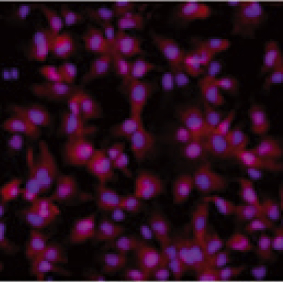
Downregulation of GMPS inhibited the proliferation of hepatocellular cancer cells via the regulation of STAT3/c-Myc pathway
311PDF: 342Supplementary: 97HTML: 40 -

MiR-550a-3p restores damaged vascular smooth muscle cells by inhibiting thrombomodulin in an in vitro atherosclerosis model
1538PDF: 835Supplementary: 204HTML: 71 -

Galunisertib enhances chimeric antigen receptor-modified T cell function
2318PDF: 1243Supplementary: 247HTML: 49 -
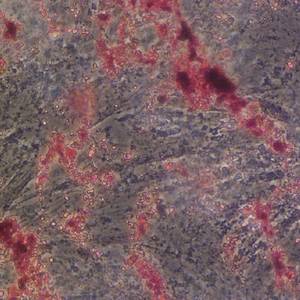
Adipose-derived stem cells promote the recovery of intestinal barrier function by inhibiting the p38 MAPK signaling pathway
2212PDF: 765Supplementary Figure: 162HTML: 94 -
LEVERAGING ORGANOID TECHNOLOGIES TO CHARACTERIZE DYNAMIC TUMOR CELL STATES DRIVING TREATMENT RESISTANCE IN PANCREATIC CANCER A. Papargyriou1-6, M. Najajreh1-4, D.P. Cook7, C.H. Maurer1,2, S. Bärthel8, P. Putze8, H.A. Messal9, S.K. Ravichandran1-3, T. Richter10, M. Knolle11, T. Metzler12, A.R. Shastri1,2,3, R. Öllinger13, J. Jasper1,2,3, L. Schmidleitner1,2,3, C.Schneeweis8, H. Ishikawa-Ankerhold14, T. Engleitner13, S. Dobiasch15, I. Heid, M.D. Luecken16, K. Steiger12, G. Kaissis11, J. Van Rheenen9, F.J. Theis10, D. Saur8, R. Rad13, M. Reichert1,2,3,4,5,17,18 | 1Translational Pancreatic Cancer Research Center, Klinik und Poliklinik für Innere Medizin II, Klinikum rechts der Isar, Technical University of Munich, Germany; 2Klinik und Poliklinik für Innere Medizin II, Klinikum rechts der Isar, Technical University of Munich, Germany; 3Center for Functional Protein Assemblies, Technical University of Munich, Garching, Germany; 4Center for Organoid Systems (COS), Technical University of Munich, Garching, Germany; 5Bavarian Cancer Research Center (BZKF), Munich, Germany; 6Institute of Stem Cell Research, Helmholtz Center Munich, Neuherberg, Germany; 7University of Ottawa, Faculty of Medicine, Department of Cellular and Molecular Medicine, Ottawa, ON, Canada; 8Chair for Translational Cancer Research and Institute of Experimental Cancer Therapy, Klinikum rechts der Isar, School of Medicine, Technical University of Munich, Germany; 9Division of Molecular Pathology, Oncode Institute, The Netherlands Cancer Institute, Plesmanlaan 121, 1066CX, Amsterdam, The Netherlands. 10Institute of Computational Biology, Helmholtz Center Munich, Neuherberg, Germany; 11Institute of Diagnostic and Interventional Radiology, Klinikum rechts der Isar München, Technical University of Munich, Germany; 12Comparative Experimental Pathology, Institut für Allgemeine Pathologie und Pathologische Anatomie, School of Medicine, Technical University of Munich, Germany; 13Institute of Molecular Oncology and Functional Genomics, School of Medicine, Technical University of Munich, Germany; 14Department of Medicine I, University Hospital of the LudwigMaximilians-University Munich, Germany; 15Department of Radiation Oncology, Technical University of Munich, Germany; 16Institute of Lung Health and Immunity (LHI), Helmholtz Munich, Comprehensive Pneumology Center (CPC-M), Germany; Member of the German Center for Lung Research (DZL); 17German Cancer Consortium (DKTK), Munich, Germany; 18Munich Institute of Biomedical Engineering (MIBE), Technical University of Munich, Germany
441 -

-

Elastofibroma dorsi: a histochemical and immunohistochemical study
2988PDF: 1065HTML: 1137 -
Imaging techniques in nanomedical research
2400PDF: 964HTML: 57 -
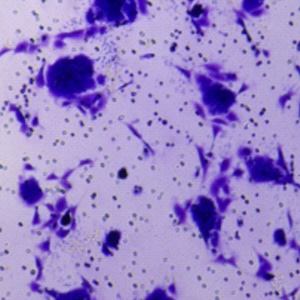
Overexpression of GPER1 suppressed esophageal carcinoma growth via activating cAMP pathway
925PDF: 538Supplementary: 119Original gels: 131HTML: 62 -

Immunofluorescence characterization of innervation and nerve-immune cell interactions in mouse lymph nodes
3428PDF: 1774Supplementary: 286HTML: 54 -

Muc5ac mucin expression during rat skin development
2801PDF: 999HTML: 750 -
P67 | EMERGING ROLE OF NUCLEAR PHOSPHOLIPASE C BETA 1 AS POTENTIAL BIOMARKER IN LUNG CANCER S. Salucci1, I. Versari1, S. Burattini2, D. Montecchio3, I. Faenza1 | 1Department of Biomedical and NeuroMotor Sciences, University of Bologna, Bologna, Italy; 2Department of Biomolecular Sciences, University of Urbino Carlo Bo, Urbino, Italy; 3Department of Medical and Surgical Sciences, University of Bologna, Bologna, Italy
465 -
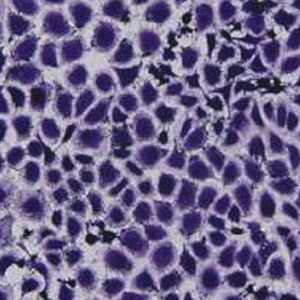
DPY30 promotes the growth and survival of osteosarcoma cell by regulating the PI3K/AKT signal pathway
1544PDF: 795Supplementary: 176HTML: 74 -
P72 | A SWAB NEGATIVE PATIENT AFTER SARS-COV-2 INFECTION DISPLAYS INCREASE OF VEGF AND FIBRONECTIN ASSOCIATED WITH ALTERATIONS OF INTERCELLULAR JUNCTIONS C. Simioni1, J.M. Sanz2, R. Gafà3, G. Cenacchi4, S. Occhionorelli3, R. Rizzo5, D. Bortolotti5, A. Passaro3, L.M. Neri3 | 1Department of Life Sciences and Biotechnology, University of Ferrara, Italy; 2Department of Chemical, Pharmaceutical and Agricultural, Sciences, University of Ferrara, Italy; 3Department of Translational Medicine, University of Ferrara, Italy; 4Department of Biomedical and Neuromotor Sciences, Alma Mater Studiorum University of Bologna, Italy; 5Department of Environmental and Prevention Sciences, University of Ferrara, Italy
439 -
IMMUNOLOGICAL MECHANISMS IN REGENERATIVE MEDICINE: A LESSON FROM THE HUMAN PLACENTA O. Parolini1,2 | 1Department of Life Science and Public Health, Università Cattolica del Sacro Cuore, Rome, Italy; 2Fondazione IRCCS Casa Sollievo della Sofferenza, San Giovanni Rotondo, Italy
530 -
-
-

The penetration of methanol into bovine cardiac and hepatic tissues is faster than ethanol and formalin
2349PDF: 1002Supplementary: 290HTML: 94 -
Mouse development - From oocyte to stem cells
2421PDF: 733HTML: 145